
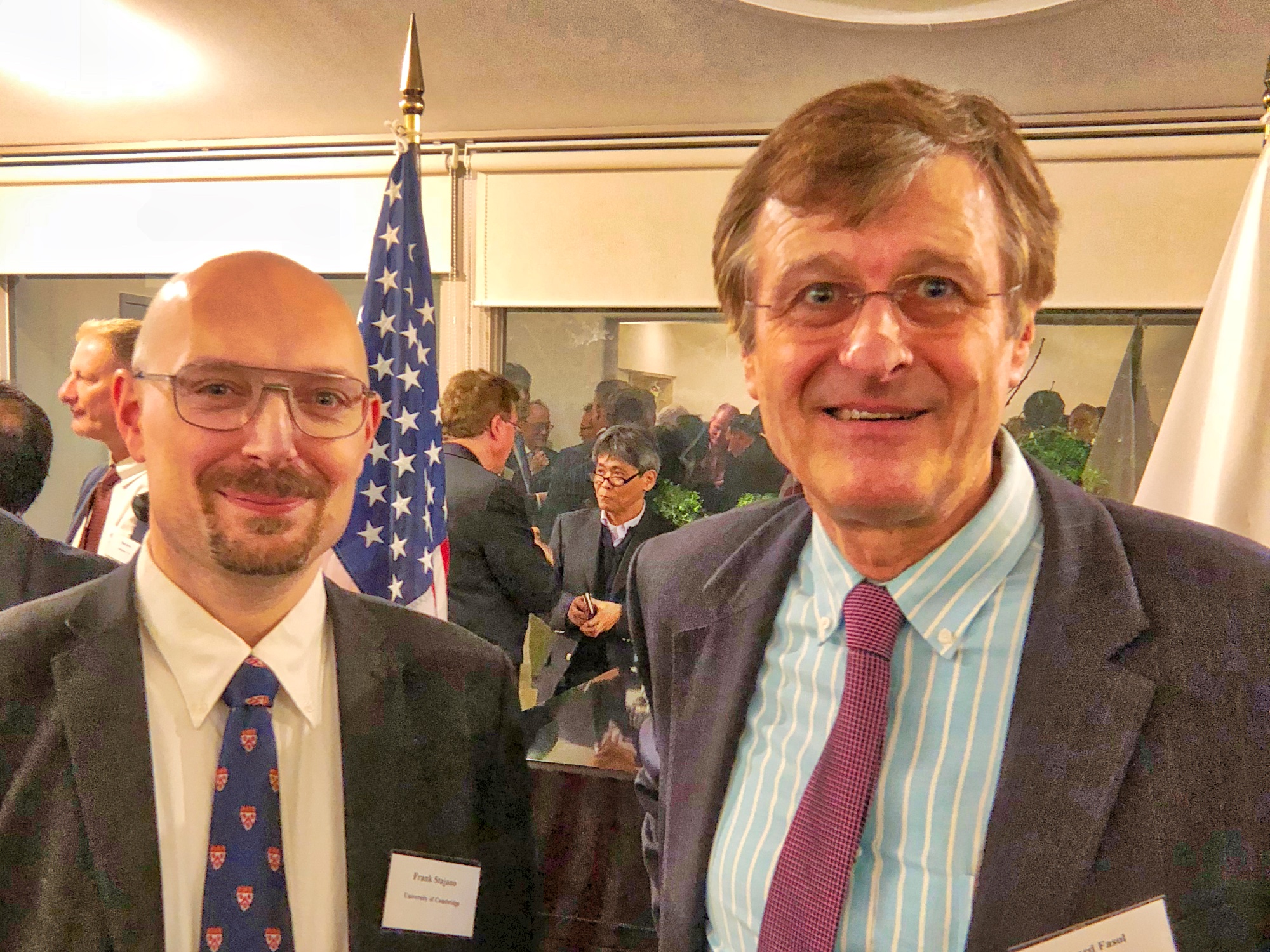
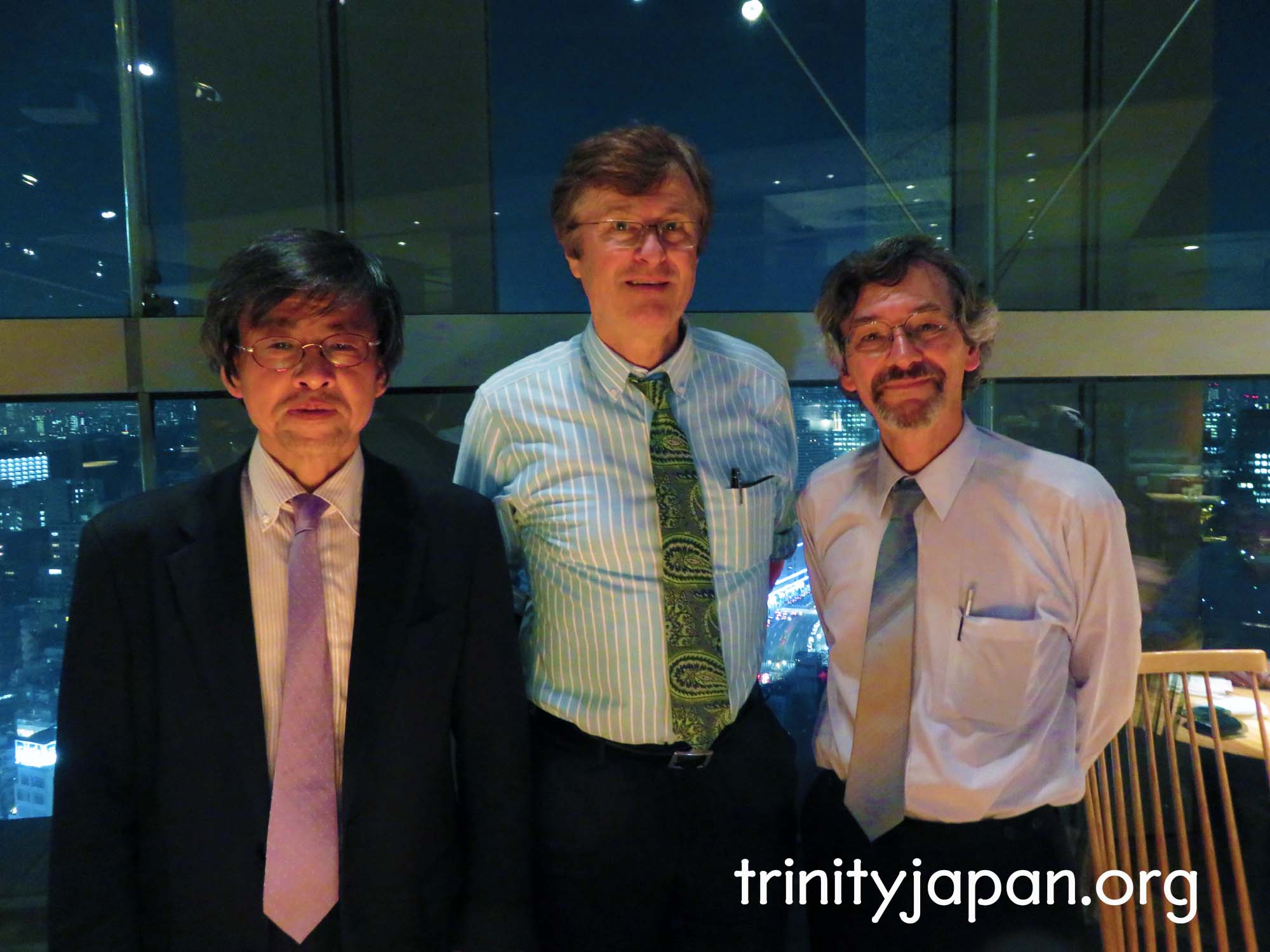
Professor Frank Stajano, Trinity Fellow, Head of the Academic Centre of Excellence in Cyber Security Research at Cambridge University, and Gerhard Fasol met at the Cyber Security Conference in Tokyo on 28 March 2018.
Author: g_fasol
-
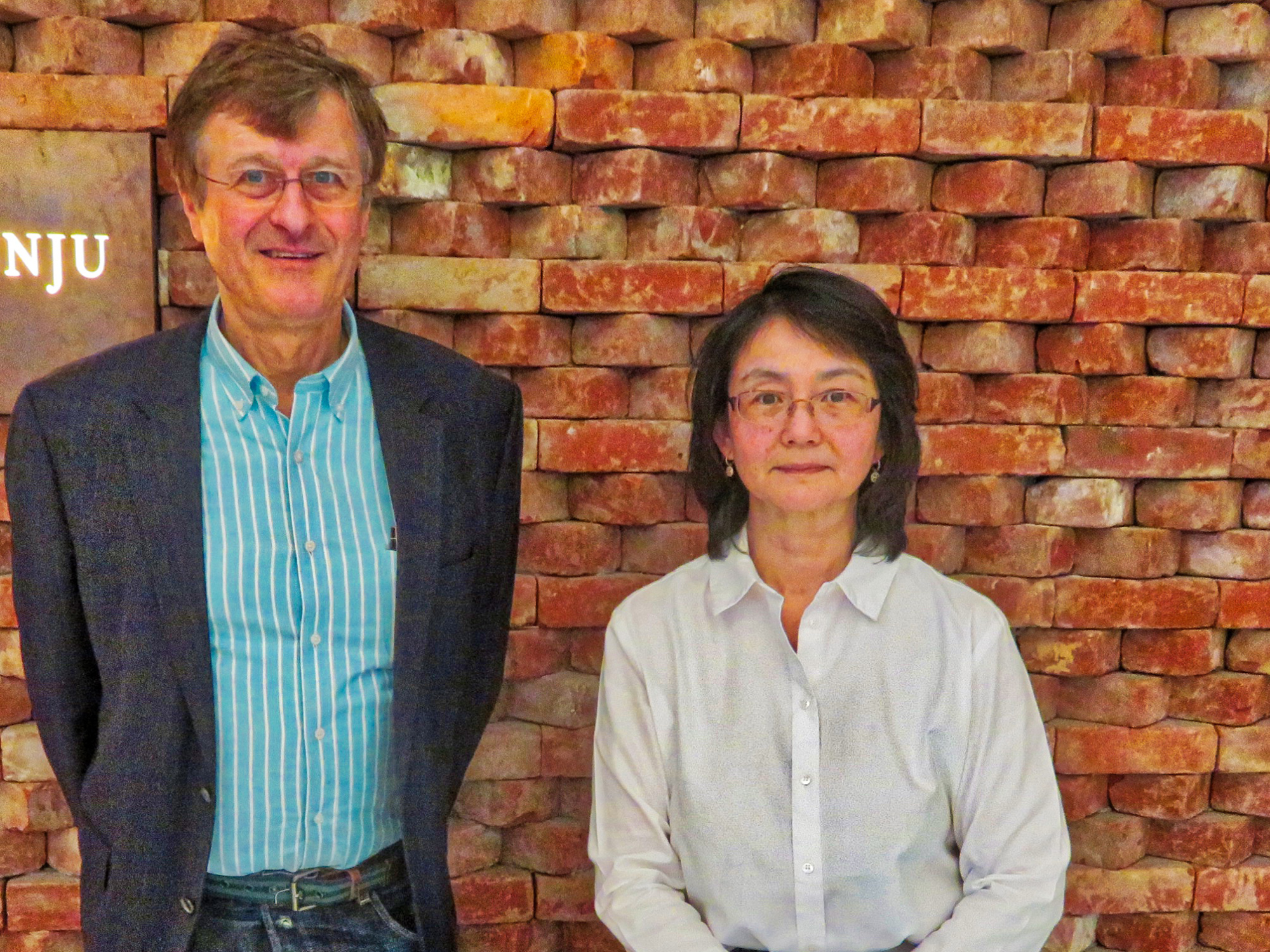
Professor Sachiko Kusukawa and Gerhard Fasol meeting on 27 March 2018
Trinity College Fellow Sachiko Kusukawa, Tutor and Director of Studies in History and Philosophy of Science, and Dean of College at Trinity, and Gerhard Fasol held a meeting on matters of Trinity in Japan in Tokyo on 27 March 2018.

Sachiko Kusukawa and Gerhard Fasol meeting on 27 March 2018 -
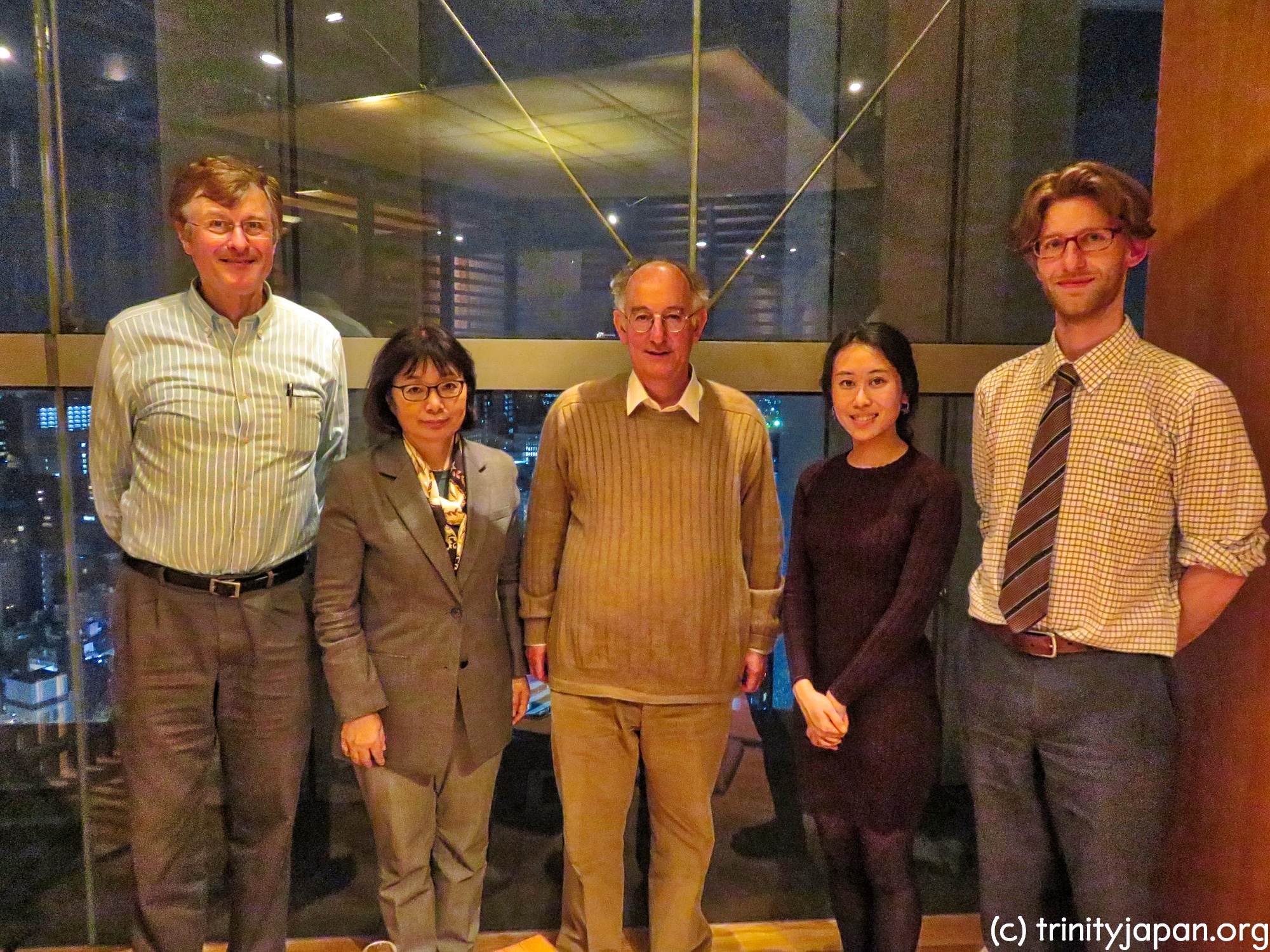
Meet Senior Research Fellow Dominic Lieven on Friday 20 April 2018
Trinity in Japan meeting in Tokyo Friday 20 April 2018 at 7pm with Senior Research Fellow Dominic Lieven
All Fellows or members of Trinity College (Cambridge University) living in or visiting Tokyo are very welcome
The fee is again YEN 10,000 including a kaiseki menu and unlimited drinks for about 2 hours, please prepay the fee as always. Usually we go for nijikai nearby.
With kind support from the College, we may be able to offer a subsidized rate for students, interns or comparable, please let me know when you register in case you like to be considered.
Registration and prepayment deadline is Friday 13 April 2018. I will send location details and account details for prepayment to those who register.

Trinity in Japan meeting in Tokyo Friday 20 April 2018 at 7pm with Senior Research Fellow Dominic Lieven 
Trinity in Japan meeting in Tokyo Friday 20 April 2018 at 7pm with Senior Research Fellow Dominic Lieven 
Trinity in Japan meeting in Tokyo Friday 20 April 2018 at 7pm with Senior Research Fellow Dominic Lieven 
Trinity in Japan meeting in Tokyo Friday 20 April 2018 at 7pm with Senior Research Fellow Dominic Lieven 
Trinity in Japan meeting in Tokyo Friday 20 April 2018 at 7pm with Senior Research Fellow Dominic Lieven 
Trinity in Japan meeting in Tokyo Friday 20 April 2018 at 7pm with Senior Research Fellow Dominic Lieven Dominic Lieven
Senior Research Fellow at Trinity, Professor Faculty of History
- https://en.wikipedia.org/wiki/Dominic_Lieven
- Professor Dominic Lieven at Cambridge
- Professor Dominic Lieven at LSE
- Professor Dominic Lieven at Harvard
- And here, Dominic Lieven on “The European Crisis” in Nikkei
Professor Dominic Lieven’s most recent book Towards the Flame: Empire, War and the End of Tsarist Russia was selected as FINANCIAL TIMES BOOK OF THE YEAR 2015, and was awarded the Pushkin House Prize – watch interviews with Professor Dominic Lieven here.
Professor Lieven’s recent book “Russia against Napoleon. The Battle for Europe, 1807 to 1814“, won the Wolfson History Prize and the Annual Prize of the Fondation Napoléon for the best foreign work on the Napoleonic era.
CIRSD Conference on WWI: Panel “What Kind of Failure?” – Prof. Dominic Lieven
Dominic Lieven: Dismantling Anglophone Hegemony Is a Costly Enterprise:
BOOKS:
- Empire: The Russian Empire and Its Rivals (Yale Nota Bene)
- Nicholas II: Twilight of the Empire
- Towards the Flame: Empire, War and the End of Tsarist Russia
- The End of Tsarist Russia: The March to World War I and Revolution
- Russia Against Napoleon: The True Story of the Campaigns of War and Peace
- The Cambridge History of Russia: Volume 2, Imperial Russia, 1689–1917
- The Aristocracy in Europe 1815-1914
- 帝国の興亡〈上〉―グローバルにみたパワーと帝国
- 帝国の興亡〈下〉―ロシア帝国とそのライバル
- ニコライ2世―帝政ロシア崩壊の真実
Copyright (c) 2018 Trinity in Japan Society All Rights Reserved
-
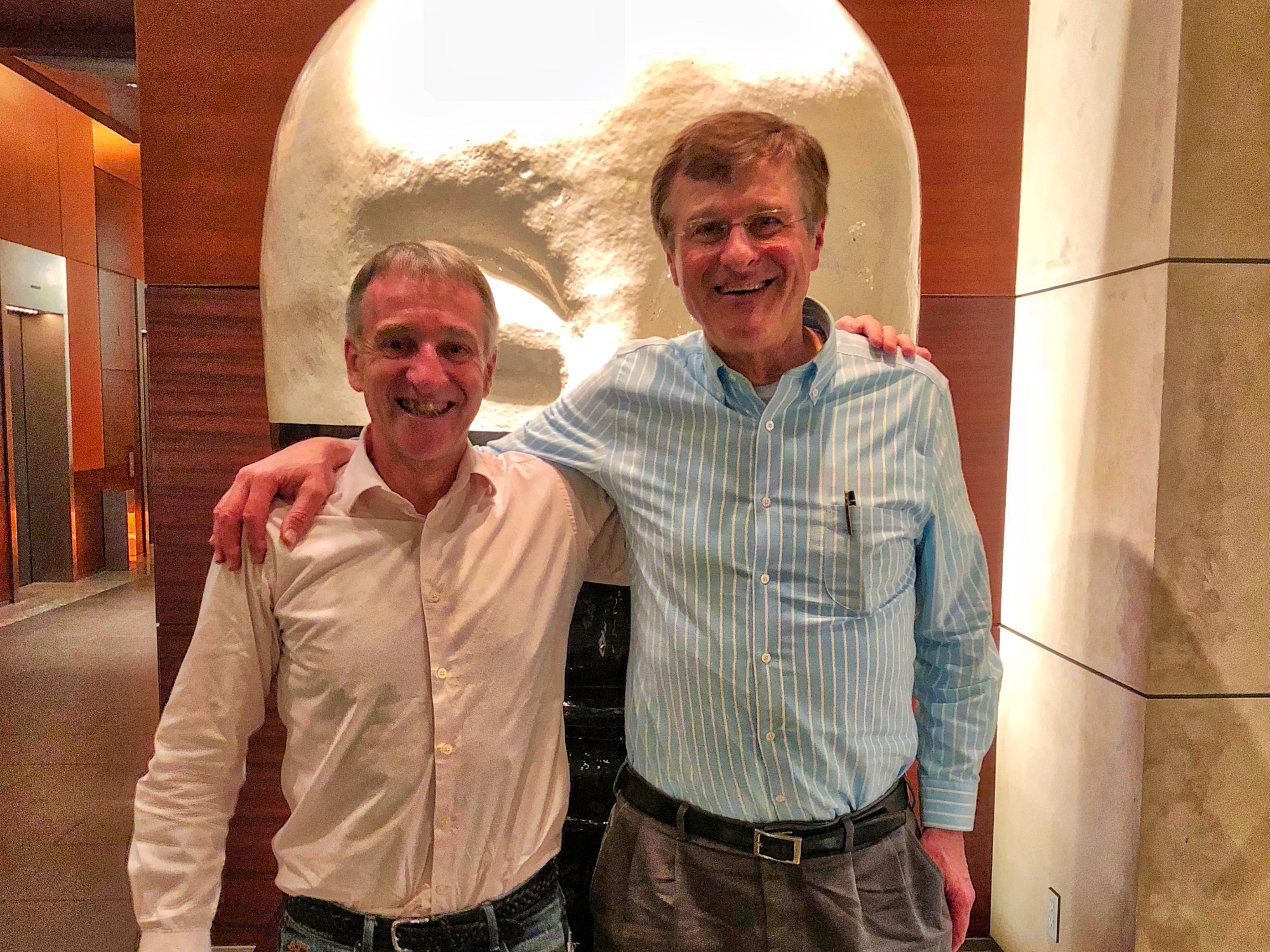
Gawain Barnard and Gerhard Fasol, 8 March 2018
Gawain Barnard, Trinity alumni from Hong Kong, and Gerhard Fasol met on 8 March 2018 in Tokyo.
-
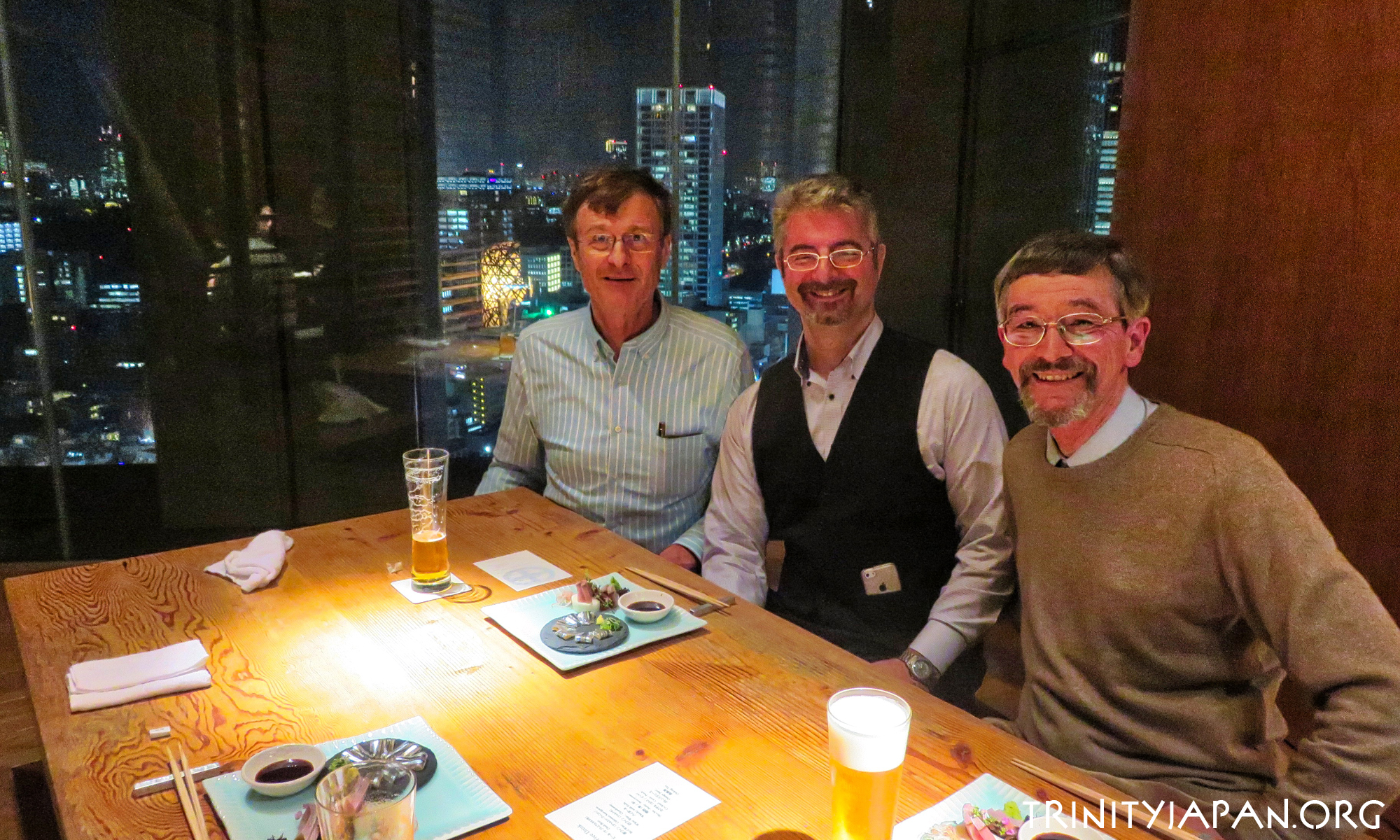
Trinity in Japan Shinenkai (New Year meeting) in Tokyo Friday 9 February 2018
Trinity in Japan dinner in Tokyo Friday 9 February 2018 at 7pm
All Fellows or members of Trinity College (Cambridge University) living in or visiting Tokyo are very welcome
The fee is again YEN 10,000 including a kaiseki menu and unlimited drinks for about 2 hours, please prepay the fee as always. Usually we go for nijikai nearby. (with kind support from the College, we may be able to offer a subsidized rate for students, interns or comparable, please let me know when you register in case you like to be considered).
Registration and prepayment deadline is Friday 2 February 2018. I will send location details and account details for prepayment to those who register.

Trinity in Japan, New Year meeting, 9 February 2018 
Trinity in Japan, New Year meeting, 9 February 2018 
Trinity in Japan, New Year meeting, 9 February 2018 
Trinity in Japan, New Year meeting, 9 February 2018 Copyright (c) 2017 Trinity in Japan Society All Rights Reserved
-
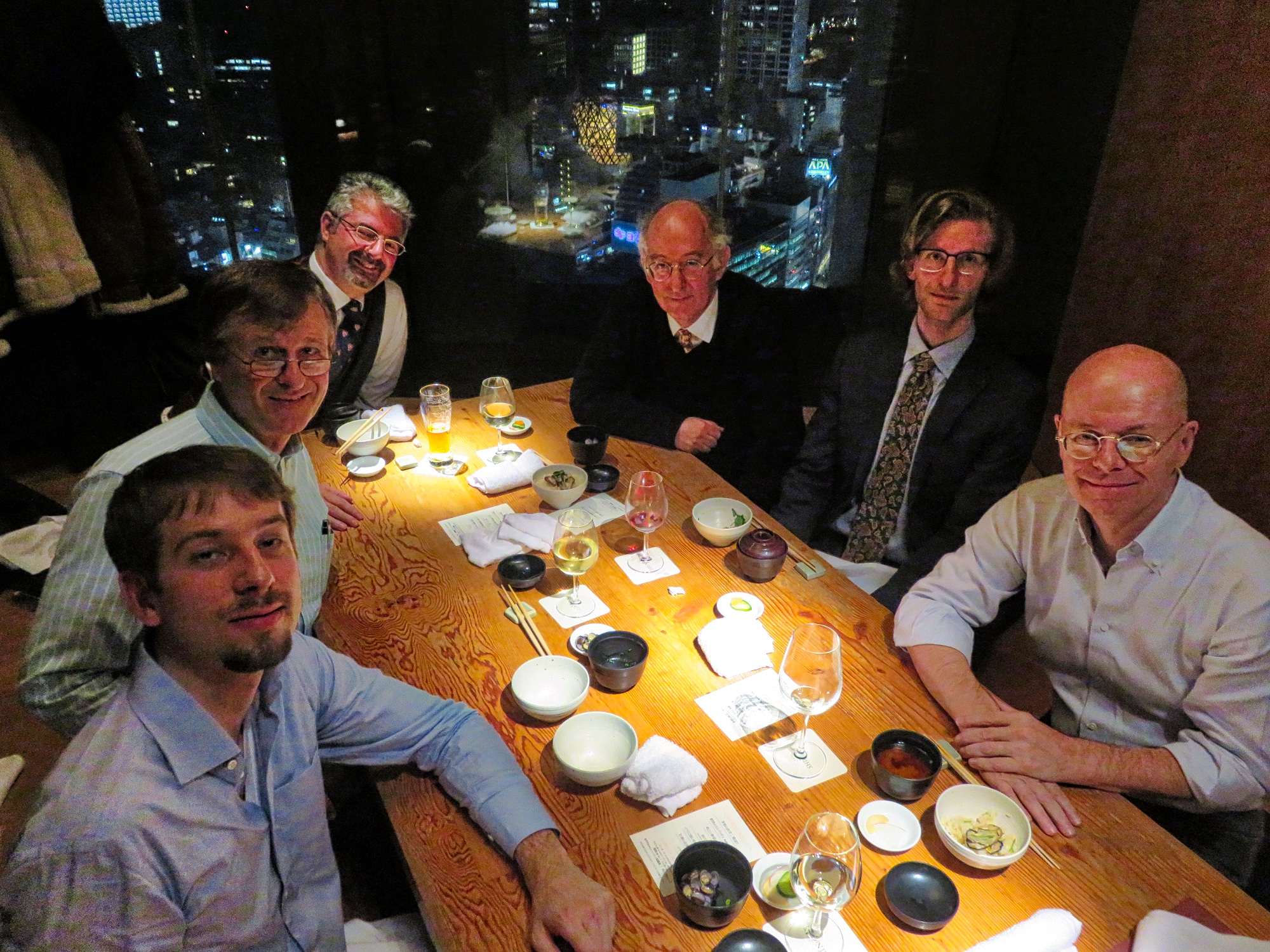
Trinity in Japan bonenkai year end meeting on Friday 15 December 2017 with Senior Research Fellow Dominic Lieven
Trinity in Japan bonenkai in Tokyo Friday 15 December 2017 at 7pm with Senior Research Fellow Dominic Lieven
All Fellows or members of Trinity College (Cambridge University) living in or visiting Tokyo are very welcome
Trinity Senior Research Fellow Dominic Lieven is planning to join our bonenkai dinner!
The fee is again YEN 10,000 including a kaiseki menu and unlimited drinks for about 2 hours, please prepay the fee as always. Usually we go for nijikai nearby. (with kind support from the College, we may be able to offer a subsidized rate for students, interns or comparable, please let me know when you register in case you like to be considered).
Registration and prepayment deadline is Friday 8 December 2017. I will send location details and account details for prepayment to those who register.

Trinity in Japan bonenkai year end meeting on Friday 15 December 2017 with Senior Research Fellow Dominic Lieven 
Trinity in Japan bonenkai year end meeting on Friday 15 December 2017 with Senior Research Fellow Dominic Lieven 
Trinity in Japan bonenkai year end meeting on Friday 15 December 2017 with Senior Research Fellow Dominic Lieven 
Trinity in Japan bonenkai year end meeting on Friday 15 December 2017 with Senior Research Fellow Dominic Lieven 
Trinity in Japan bonenkai year end meeting on Friday 15 December 2017 with Senior Research Fellow Dominic Lieven 
Trinity in Japan bonenkai year end meeting on Friday 15 December 2017 with Senior Research Fellow Dominic Lieven 
Trinity in Japan bonenkai year end meeting on Friday 15 December 2017 with Senior Research Fellow Dominic Lieven 
Trinity in Japan bonenkai year end meeting on Friday 15 December 2017 with Senior Research Fellow Dominic Lieven 
Trinity in Japan bonenkai year end meeting on Friday 15 December 2017 with Senior Research Fellow Dominic Lieven Dominic Lieven
Senior Research Fellow at Trinity, Professor Faculty of History
- https://en.wikipedia.org/wiki/Dominic_Lieven
- Professor Dominic Lieven at Cambridge
- Professor Dominic Lieven at LSE
- Professor Dominic Lieven at Harvard
- And here, Dominic Lieven on “The European Crisis” in Nikkei
Professor Dominic Lieven’s most recent book Towards the Flame: Empire, War and the End of Tsarist Russia was selected as FINANCIAL TIMES BOOK OF THE YEAR 2015, and was awarded the Pushkin House Prize – watch interviews with Professor Dominic Lieven here.
Professor Lieven’s recent book “Russia against Napoleon. The Battle for Europe, 1807 to 1814“, won the Wolfson History Prize and the Annual Prize of the Fondation Napoléon for the best foreign work on the Napoleonic era.
CIRSD Conference on WWI: Panel “What Kind of Failure?” – Prof. Dominic Lieven
Dominic Lieven: Dismantling Anglophone Hegemony Is a Costly Enterprise:
BOOKS:
- Empire: The Russian Empire and Its Rivals (Yale Nota Bene)
- Nicholas II: Twilight of the Empire
- Towards the Flame: Empire, War and the End of Tsarist Russia
- The End of Tsarist Russia: The March to World War I and Revolution
- Russia Against Napoleon: The True Story of the Campaigns of War and Peace
- The Cambridge History of Russia: Volume 2, Imperial Russia, 1689–1917
- The Aristocracy in Europe 1815-1914
- 帝国の興亡〈上〉―グローバルにみたパワーと帝国
- 帝国の興亡〈下〉―ロシア帝国とそのライバル
- ニコライ2世―帝政ロシア崩壊の真実
Copyright (c) 2017 Trinity in Japan Society All Rights Reserved
-
Dinner in Tokyo Friday 20 October 2017
Trinity in Japan dinner in Tokyo Friday 20 October 2017 at 7pm
All Fellows or members of Trinity College (Cambridge University) living in or visiting Tokyo are very welcome
The fee is again YEN 10,000 including a kaiseki menu and unlimited drinks for about 2 hours, please prepay the fee as always. Usually we go for nijikai nearby. (with kind support from the College, we may be able to offer a subsidized rate for students, interns or comparable, please let me know when you register in case you like to be considered).
Registration and prepayment deadline is Friday 13 October 2017. I will send location details and account details for prepayment to those who register.

Trinity in Japan dinner in Tokyo Friday 20 October 2017 at 7pm 
Trinity in Japan dinner in Tokyo Friday 20 October 2017 at 7pm Copyright (c) 2017 Trinity in Japan Society All Rights Reserved
-
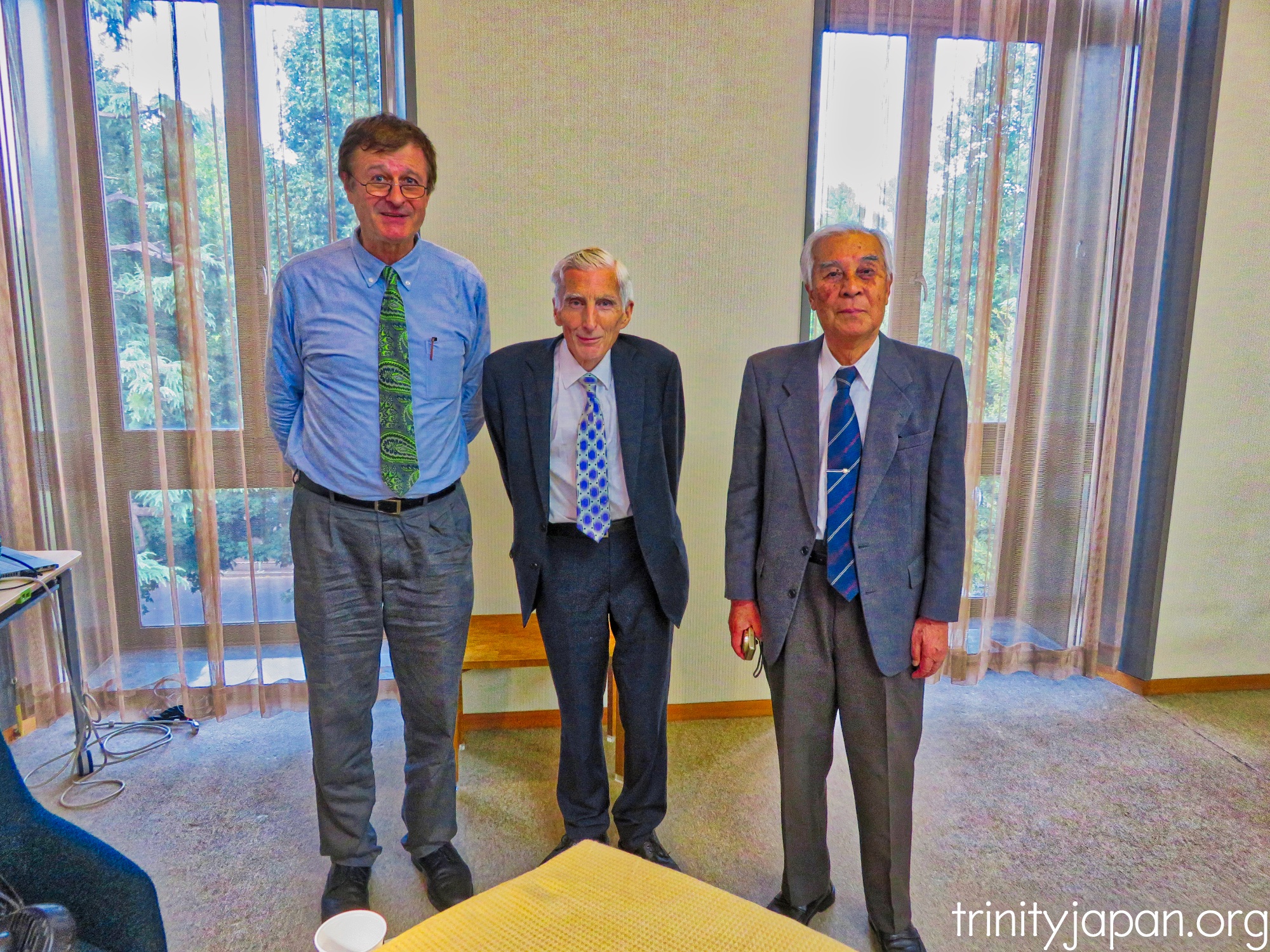
Lord Martin Rees, former Master of Trinity College, Lecture “The world in 2050 – and beyond”
Lord Martin Rees, Baron Rees of Ludlow OM FRS, Master of Trinity College 2004-2012
Lord Martin Rees: “The world in 2050 – and beyond”
Lord Martin Rees, Master of Trinity College 2004-2012, gave a public lecture at the Japan Academy in Tokyo on the topic “The world in 2050 – and beyond” on Wednesday 4 October 2017 at 14:30.
Details here:
http://www.japan-acad.go.jp/japanese/news/2017/082901.html
location:
http://www.japan-acad.go.jp/japanese/about/access.htmlSummary
notes written by Gerhard Fasol, based on Lord Martin Rees’ lecture notes and Gerhard Fasol’s notes taken during the lecture
This century is special – a new geological era, the Anthropocene
Earth existed for 45 million centuries, humans a few thousand centuries. This century is special: we are in a new epoch, the Anthropocene, its the first century where the future of earth depends on humans.
Humans could degrade the biosphere, or cause misdirected technology to destroy or diminish civilisation.
Martin Rees has written a book on these issues, the same book is entitled “Our final century” in the UK, and “Our final hour” in the USA, reflecting the contrast of British understatement and American emphasis on urgency.
Martin Rees did not think that humanity would extinguish itself, but feared that humans would be lucky to avoid serious setbacks, and nuclear armageddon was closely avoided during the cold war.
Nuclear weapons are based on 20th century science, in the 21th century we have created new existential risks based on bio, cyber and AI.
Population growth, urbanization and food
World population was about 3 billion in 1960, now exceeds 7 billion, and is forecast to reach 9 billion by 2050.
Urbanization continues, predictions are that 70% of people will live in cities by 2050, requiring excellence of governance.
Discussing population growth has become taboo, as predictions in the 1970s by the Club of Rome and others have proven wrong. Food shortages were predicted, improvements in food production technology prevented disasters.
Can 9 billion people be fed? Yes they can, using improved and sustainable agriculture.
Famines do occur, but they are the result of wars and political causes, there is no overall food shortage on earth.
Projections of population growth out to the year 2100 vary between 6 billion and 16 billion depending on model assumptions, see Jeff Tollefson : “Seven billion and counting” Nature 478 300 (19 October 2011) doi:10.1038/478300a
Bio diversity: “mass extinction is the sin that future generations will least forgive us for”
Conserving our variety of species is not only about conserving food production and agriculture, there is also an ethical aspect. E O Wilson said: “mass extinction is the sin that future generations will least forgive us for”.
E.O. Wilson Biodiversity Foundation: https://eowilsonfoundation.org/
Johan Rockström argues that humanity must stay within “planetary boundaries” to avoid catastrophic environmental damage: Nature special on planetary boundaries (23 September 2009)
Climate change and the Keeling curve
Charles David Keeling measured atmospheric CO2 concentrations at Hawaii’s Mauna Loa Observatory starting in 1958 and showed that atmospheric CO2 at the Mauna Loa Observatory rose from around 320 ppm in 1960 to around 400 ppm around 2015, with oscillations due to plant growth cycles around the year.
For an overview discussion see: American Chemical Society ACS “The Keeling Curve: Carbon Dioxide Measurements at Mauna Loa”.
https://www.acs.org/content/acs/en/education/whatischemistry/landmarks/keeling-curve.htmlThere are some uncertainties in our knowledge of global warming, eg our uncertainty about future fossile fuel usage, or the impact of water vapor and clouds (see: the fifth Assessment Report AR5 by the Intergovernmental panel on climate change (IPCC).
Most agree on two messages:
- Regional disruptions to weather patterns within the next 20-30 years will aggravate pressures on food and water and engender migration
- Under “business as usual” scenarios we can’t rule out, later in the century, really catastrophic warming, and tipping points triggering long-term trends like the melting of the Greenland’s icecap
Science, economics, ethics, and our responsibility for future generations should we discriminate on the grounds of date of birth?
Some economists apply quasi-commercial discounting of the future, and essentially write off anything beyond 2050, see Bjørn Lomborg’s Copenhagen Consensus:
- http://www.copenhagenconsensus.com/post-2015-consensus
- Bjørn Lomborg: The Skeptical Environmentalist: Measuring the Real State of the World
Economists Stern and Weizman argue that it is worth paying an insurance premium to protect future generations against worst-case scenarios, see the Stern Review.
Note that there are psychological factors: people generally don’t accept discounting the future where radioactivity is concerned: radioactive waste disposal is required to prevent leakage for 10,000 years.
The ethical question is: should we discriminate based on the date of birth?
Global warming: do we have a plan B?
CO2 levels will continue to rise, despite the Paris agreement. Pressure for panic measures might rise.
Geo-engineering measures (injecting aerosols into the stratosphere to cool the climate, carbon capture etc) are discussed, but are likely to lead to political nightmares: e.g. some cold areas in the world might actually want the climate to be warmer in their areas.
Two mitigation measures are politically realistic:
- Energy efficiency (building insulation, lighting etc)
- R&D into low carbon energy generation: renewables, grid technology, energy storage…
Bio risks and “gain of function”
“Gain of function”: in 2012 groups in Wisconsin and in Holland showed that it was relatively easy to make the influenza virus more virulent and more contagious, in 2014 the US Government decided to stop funding such “gain of function” experiments.
“Bio-hacking” is hard to control globally. Freeman Dyson asked, when children will be able to create new organisms and “play God on the kitchen table”.
Robotics and artificial intelligence
20 years ago IBM’s Deep Blue beat Kasparov, programmed by the world’s best chess players.
Last year Deep Mind (acquired by Google) beat the world champion of Go, however programed by machine learning.
Will robots and AI create more new employment than they eliminate – the old question of industrial revolutions, or a new paradigm?
Robots and AI machines could act orthogonal to the interests of human.
Are we responsible for the well being of intelligent robots?
Ray Kurzweil’s singularity. Ending your days in an English churchyard vs in a Californian refrigerator
Ray Kurzweil: The singularity is near – when humans transcend biology
Ray Kurzweil thinks that humans could transcend our biological limitations by fusing with machines. Humans could merge with computers.
For worry that this “singularity” transition might not come during his lifetime, Ray Kurzweil wants his body to be frozen to await the singularity to arrive, frozen by the “Society for the abolition of involuntary death”.
Lord Martin Rees prefers to end his days in an English churchyard rather than a Californian refrigerator, and has therefore been labeled an old fashioned “deathist”.
Lord Rees was amused to find out that at least three British academics are subscribing such a body freezing program, although one of these seems to have opted for the discount economy class option, where only the brain, not the whole body, is frozen…
Robots have a big future in space
Flotillas of miniaturized probes will explore the solar system eroding the case for human space flight.
Human space flight will be for adventurers, but there is no escape from earth. Space is too hostile for humans.
Life on other planets – we don’t even know how life started on our planet earth
There is no advanced life anywhere in our solar system. There might be freeze-dried bacteria on Mars, there might be creatures swimming under the ice on Saturn’s moon Enceladus.
Most stars in the sky are orbited by planets, like our Sun. Could there be “twins” with similar conditions as our planet earth? Some have been found, and there could be millions in our Milky Way.
Could there be life?
We don’t even know how life started on our planet earth, and we don’t know if there are other forms of life beyond our life based on DNA/RNA chemistry.
Searching for signals from life on far away planets is worthwhile. If we can actually identify such signals this would prove that mathematics, logic and physics can be done by others outside our human sculls and brains.
Lord Martin Rees is chairing an intensive search for radio and optical signals from extraterrestrial life funded by Yuri Milner:
Yuri Milner to Fund $100 Million Search for Intelligent Alien Life (Wall Street Journal, 20 July 2015)Astronomers and the “far future”: “eternity is very long, especially towards the end”
Astronomers have one big difference to most people – they care for the “far future”.
Our Sun was formed 4.5 billion years ago, and has about 6 billion more years to go before the fuel runs out. And the universe will continue to expand.
As Woody Allen says (https://en.wikiquote.org/wiki/Talk:Woody_Allen): eternity is very long, especially towards the end.
We may not even be at the half-way stage of evolution.
Our wet organic brains may have reached close to their limits in evolution, but machines and robots are just at the beginning. Non-biological “brains” may develop beyond any expectation.
Facing global challenges
The most important challenges are global: global warming, energy, food, population.
Scientists can act globally, and can influence politics- if they do it right.
We need to change priorities and perspectives: we need to prioritize clean energy, sustainable agriculture, and need to manage the risks of new technologies.
To know more:
Martin Rees has written
- Our final century” (UK version), and
- Our final hour” (US version)
see also the series of articles by Martin Rees in the Huffington Post
- There Could Be 11 Billion People on Earth in 2100. That Doesn’t Have to Scare You.
- The World Is Getting Warmer — But Here’s What We Can Do Now to Prepare
- The Dark Side of World-Changing Technologies
- Space Exploration Could Herald the Beginning of the Post-Human Era
- Why Science and Philosophy Should Guide Today’s Youth in Creating a More Sustainable World

Lord Martin Rees, former Master of Trinity College, Lecture “The world in 2050 – and beyond” 
Lord Martin Rees, former Master of Trinity College, Lecture “The world in 2050 – and beyond” -
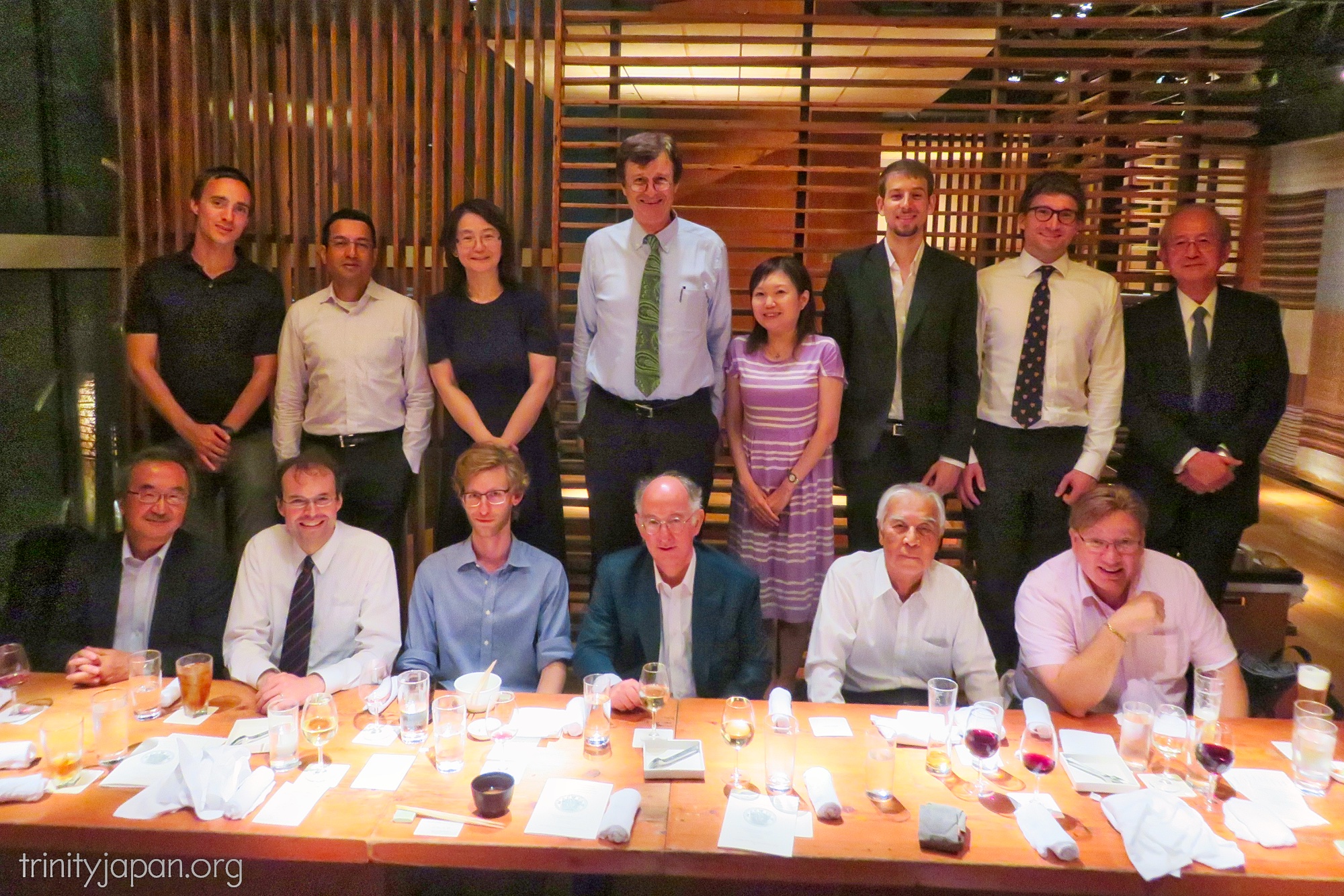
Trinity in Japan special event in Tokyo Friday 8 September 2017 with Fellows and Professors Mikael Adolphson, Sachiko Kusukawa and Dominic Lieven
Special Trinity in Japan event in Tokyo Friday 8 September 2017
Fellows and Professors Mikael Adolphson, Sachiko Kusukawa and Dominic Lieven joined us
- 6pm – 7pm drinks reception
- 7pm – 9pm dinner (fee: YEN 10,000 with a reduced rate of YEN 3,000 for students/young members/freelancers)
- after 9pm – nijikai drinks nearby
Three Fellows, Professors Mikael Adolphson, Sachiko Kusukawa and Dominic Lieven and eleven Trinity in Japan members attended the special Trinity in Japan event on Friday 8 September 2017 in Tokyo, organized by Gerhard Fasol, Trinity in Japan Chair, and Past Fellow of Trinity.
Discussions reflected the very wide spectrum of curiosity, energy and achievements of Trinity members.
Bringing religious studies to Japan’s venture start-ups, finding and understanding the oldest rock of Japan, leading the United Nations and foreign Press in Japan, finance at Japan’s largest automobile maker, working on overseas mergers and acquisitions with Japan’s trading companies, and in the other direction, working with foreign companies on acquisitions in Japan, teaching English as a preparation for future action in Japan, writing Novels, taking care of Japan’s Government finance, bringing Cambridge venture companies to Japan, European Revolutions, royalty and leadership for Japan’s Ministries, and many other topics were discussed this evening.
We started with a drinks party.
Celebrating 700 years history of The College of the Holy and Undivided Trinity
Professor Sachiko Kusukawa brought us best wishes from Trinity, and words of greeting from Professor Michael Banner, Dean of Chapel and Fellow for Development of Trinity. Michael Banner reminded us of Trinity’s 700 years of history, celebrating the Septcentenary of the Establishment of the King’s Scholars in the University of Cambridge, the Foundation of King Edward the Second, The Founding of the King’s Hall on 7 July 1317. Sachiko Kusukawa brought each of us a copy of the speech given by the Master, Sir Gregory Winter, to celebrate the Septcentenary.
About 2/3 of members moved to a restaurant nearby for nijikai, and three of us continued discussions at a sanjikai into the early hours…

Trinity in Japan 8 September 2017 
Trinity in Japan 8 September 2017 
Trinity in Japan 8 September 2017 
Trinity in Japan 8 September 2017 
Trinity in Japan 8 September 2017 
Trinity in Japan 8 September 2017 
Trinity in Japan 8 September 2017 
Trinity in Japan 8 September 2017 
Trinity in Japan 8 September 2017 
Trinity in Japan 8 September 2017 
Trinity in Japan 8 September 2017 
Trinity in Japan 8 September 2017 
Trinity in Japan 8 September 2017 
Trinity in Japan 8 September 2017 
Trinity in Japan 8 September 2017 
Trinity in Japan 8 September 2017 
Trinity in Japan 8 September 2017 
Trinity in Japan 8 September 2017 
Trinity in Japan 8 September 2017 
Trinity in Japan 8 September 2017 
Trinity in Japan 8 September 2017 
Trinity in Japan 8 September 2017 
Trinity in Japan 8 September 2017 
Trinity in Japan 8 September 2017 
Trinity in Japan 8 September 2017 
Trinity in Japan 8 September 2017 
Trinity in Japan 8 September 2017 
Trinity in Japan 8 September 2017 
Trinity in Japan 8 September 2017 
Trinity in Japan 8 September 2017 
Trinity in Japan 8 September 2017 
Trinity in Japan 8 September 2017 
Trinity in Japan 8 September 2017 
Trinity in Japan 8 September 2017 
Trinity in Japan 8 September 2017 
Trinity in Japan 8 September 2017 
Trinity in Japan 8 September 2017 
Trinity in Japan 8 September 2017 
Trinity in Japan 8 September 2017 Mikael Adolphson
Fellow and AMES Director of Studies at Trinity, Keidanren Professor of Japanese Studies

Mikael Adolphson, Fellow and AMES Director of Studies at Trinity, Keidanren Professor of Japanese Studies - https://www.trin.cam.ac.uk/undergraduate/courses/asian-and-middle-eastern-studies/
- http://www.ames.cam.ac.uk/directory/adolphsonmickey
- https://en.wikipedia.org/wiki/Mikael_Adolphson
Books:
- The Gates of Power: Monks, Courtiers, and Warriors in Premodern Japan by Mikael S. Adolphson
- The Teeth and Claws of the Buddha: Monastic Warriors and Sohei in Japanese History by Mikael S. Adolphson
- Heian Japan, Centers and Peripheries by Mikael S. Adolphson (Editor), Edward Kamens (Editor), Stacie Matsumoto (Editor)
- Lovable Losers: The Heike in Action and Memory by Mikael S. Adolphson (Editor), Anne Commons (Editor)
Sachiko Kusukawa
Dean of Trinity College and Fellow in History and the Philosophy of Science, Professor of History

Sachiko Kusukawa, Dean of Trinity College and Fellow in History and the Philosophy of Science, Professor of History - https://www.trin.cam.ac.uk/news/seventeenth-century-scientific-sensation-on-the-bbc/
- http://www.hist.cam.ac.uk/directory/sk111@cam.ac.uk
- http://www.crassh.cam.ac.uk/people/profile/sachiko-kusukawa
Books:
- The Transformation of Natural Philosophy: The Case of Philip Melanchthon (Ideas in Context) by Sachiko Kusukawa (Author)
- Transmitting Knowledge: Words, Images, and Instruments in Early Modern Europe (Oxford-Warburg Studies) by Sachiko Kusukawa (Editor), Ian Maclean (Editor)
- Melanchthon: Orations on Philosophy and Education (Cambridge Texts in the History of Philosophy) by Melanchthon (Author), Sachiko Kusukawa (Editor), Christine F. Salazar (Translator)
- Picturing the Book of Nature: Image, Text, and Argument in Sixteenth-Century Human Anatomy and Medical Botany by Sachiko Kusukawa (Author)
- Wittenberg University Library Catalogue of 1536 (Medieval & Renaissance Texts & Studies) by Sachiko Kusukawa (Author)
- Natural Philosophy Epitomised: Books 8-11 of Gregor Reisch’s Philosophical pearl (1503) by Sachiko Kusukawa (Author)
- Philosophy in the Sixteenth and Seventeenth Centuries: Conversations with Aristotle by Constance Blackwell and Sachiko Kusukawa
Dominic Lieven
Senior Research Fellow at Trinity, Professor Faculty of History

Dominic Lieven, Senior Research Fellow at Trinity, Professor Faculty of History - https://en.wikipedia.org/wiki/Dominic_Lieven
- Professor Lieven at LSE
- Professor Dominic Lieven at Harvard
- And here, Dominic Lieven on “The European Crisis” in Nikkei
Professor Dominic Lieven’s most recent book Towards the Flame: Empire, War and the End of Tsarist Russia was selected as FINANCIAL TIMES BOOK OF THE YEAR 2015, and was awarded the Pushkin House Prize – watch interviews with Professor Dominic Lieven here.
Professor Lieven’s recent book “Russia against Napoleon. The Battle for Europe, 1807 to 1814“, won the Wolfson History Prize and the Annual Prize of the Fondation Napoléon for the best foreign work on the Napoleonic era.
CIRSD Conference on WWI: Panel “What Kind of Failure?” – Prof. Dominic Lieven
Dominic Lieven: Dismantling Anglophone Hegemony Is a Costly Enterprise:
BOOKS:
- Empire: The Russian Empire and Its Rivals (Yale Nota Bene)
- Nicholas II: Twilight of the Empire
- Towards the Flame: Empire, War and the End of Tsarist Russia
- The End of Tsarist Russia: The March to World War I and Revolution
- Russia Against Napoleon: The True Story of the Campaigns of War and Peace
- The Cambridge History of Russia: Volume 2, Imperial Russia, 1689–1917
- The Aristocracy in Europe 1815-1914
- 帝国の興亡〈上〉―グローバルにみたパワーと帝国
- 帝国の興亡〈下〉―ロシア帝国とそのライバル
- ニコライ2世―帝政ロシア崩壊の真実
Contact and information
Gerhard Fasol Trinity 1978, Past Fellow
Copyright (c) 2017 Trinity in Japan Society All Rights Reserved
-
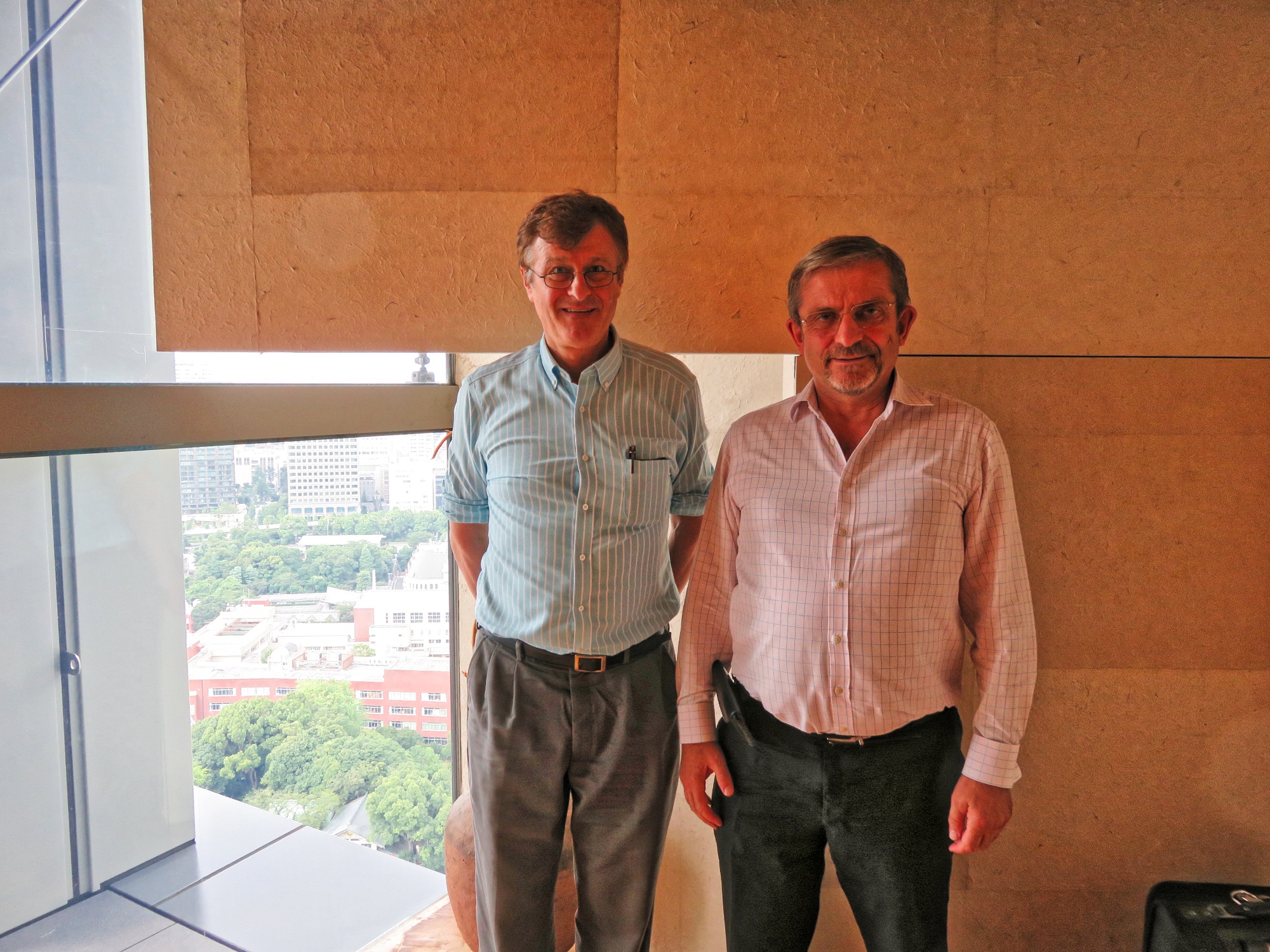
Trinity in Japan Lunch meeting 29 August 2017
Trinity in Japan Lunch meeting 29 August 2017 with Mark-Eric Jones
Meeting for lunch on Tuesday 29 August 2017: Gerhard Fasol and Mark-Eric Jones, discussions about ventures, health, IoT, entrepreneurs, trends, brain.
Copyright (c) 2017 Trinity in Japan Society All Rights Reserved
-
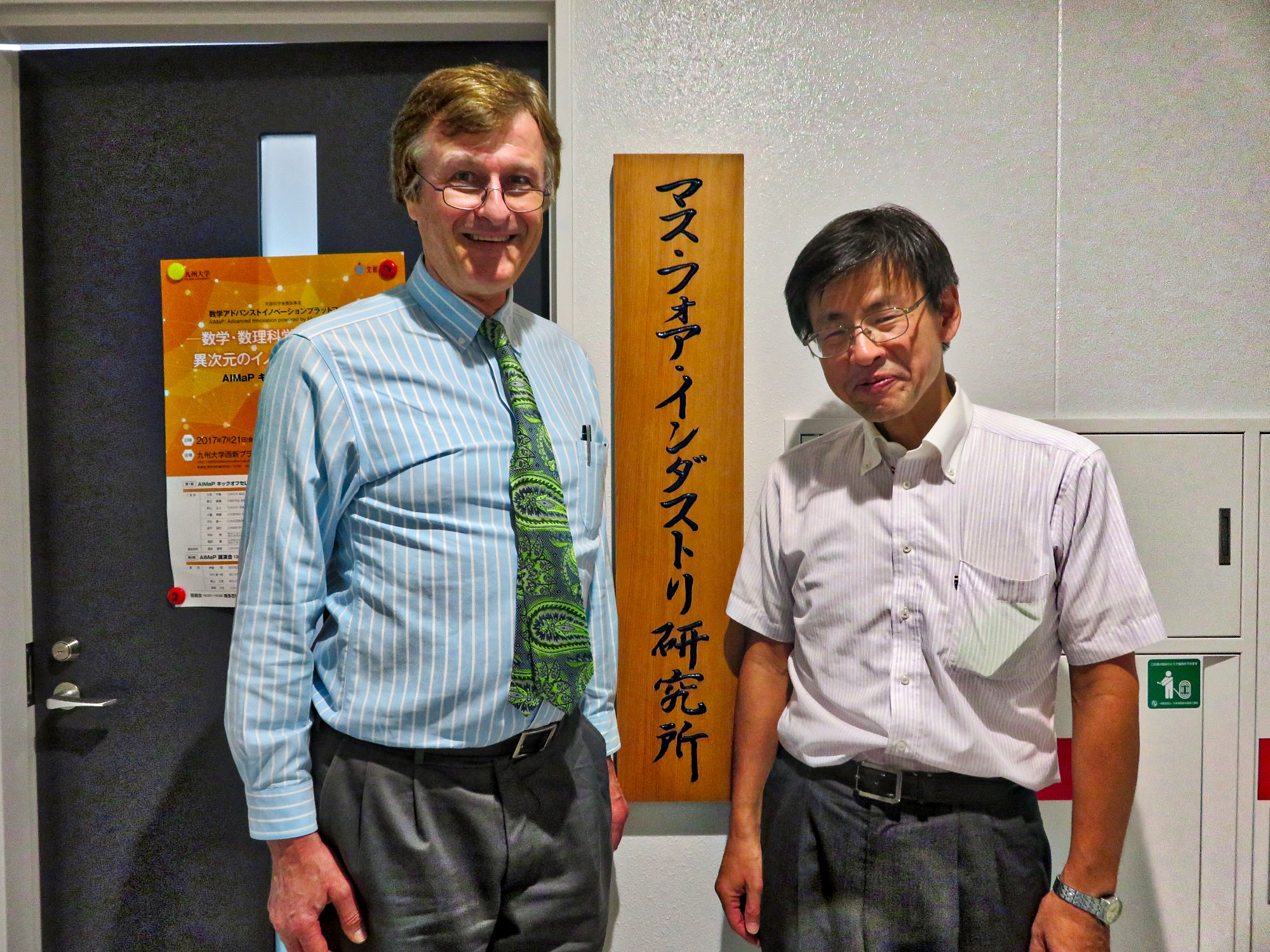
Trinity in Japan meeting at the Mathematics for Industry Institute of Kyushu University
Trinity in Japan meeting at the Mathematics for Industry Research Institute, University of Kyushu on 10 July 2017
Mathematics for Industry Institute Director Yasuhide Fukumoto and Gerhard Fasol
Yasuhei Fukumoto, Director of the Mathematics for Industry Institute of the University of Kyushu (past Visiting Fellow Commoner at Trinity) met with Gerhard Fasol on 10 July 2017.

Mathematics for Industry Institute Director Yasuhide Fukumoto and Gerhard Fasol Copyright (c) 2017 Trinity in Japan Society All Rights Reserved
-
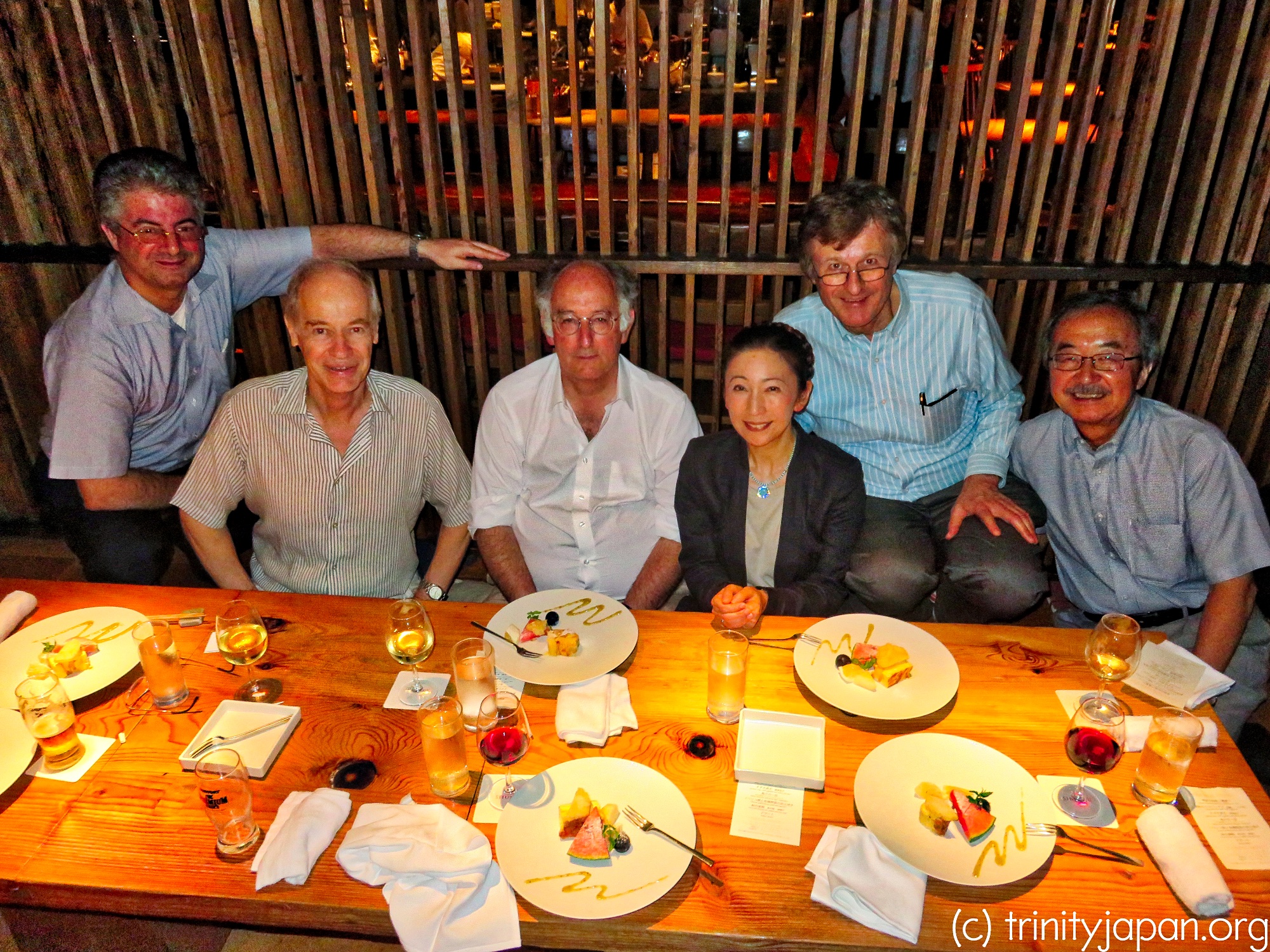
Trinity in Japan meeting in Tokyo – tanabata 七夕 dinner – Friday 7 July 2017. Celebrating the foundation of King’s Hall 700 years ago on 7 July 1317
Trinity in Japan tanabata 七夕 dinner in Tokyo Friday 7 July 2017 at 7pm
All Fellows or members of Trinity College (Cambridge University) living in or visiting Tokyo are very welcome
The fee is again YEN 10,000 including a kaiseki menu and unlimited drinks for about 2 hours, please prepay the fee as always. Usually we go for nijikai nearby.
Registration and prepayment deadline is Friday 30 June 2017. I will send location details and account details for prepayment to those who register.

Trinity in Japan meeting in Tokyo – tanabata 七夕 dinner – Friday 7 July 2017 7pm Trinity in Japan meeting in Tokyo – tanabata 七夕 dinner – Friday 7 July 2017 7pm 
Trinity in Japan meeting in Tokyo – tanabata 七夕 dinner – Friday 7 July 2017 7pm 
Trinity in Japan meeting in Tokyo – tanabata 七夕 dinner – Friday 7 July 2017 7pm 
Trinity in Japan meeting in Tokyo – tanabata 七夕 dinner – Friday 7 July 2017 7pm Trinity in Japan dinner meeting Dominic Lieven
Senior Research Fellow at Trinity, Professor Faculty of History
- https://en.wikipedia.org/wiki/Dominic_Lieven
- Professor Lieven at LSE
- Professor Dominic Lieven at Harvard
- And here, Dominic Lieven on “The European Crisis” in Nikkei
Professor Dominic Lieven’s most recent book Towards the Flame: Empire, War and the End of Tsarist Russia was selected as FINANCIAL TIMES BOOK OF THE YEAR 2015, and was awarded the Pushkin House Prize – watch interviews with Professor Dominic Lieven here.
Professor Lieven’s recent book “Russia against Napoleon. The Battle for Europe, 1807 to 1814“, won the Wolfson History Prize and the Annual Prize of the Fondation Napoléon for the best foreign work on the Napoleonic era.
CIRSD Conference on WWI: Panel “What Kind of Failure?” – Prof. Dominic Lieven
Dominic Lieven: Dismantling Anglophone Hegemony Is a Costly Enterprise:
BOOKS:
- Empire: The Russian Empire and Its Rivals (Yale Nota Bene)
- Nicholas II: Twilight of the Empire
- Towards the Flame: Empire, War and the End of Tsarist Russia
- The End of Tsarist Russia: The March to World War I and Revolution
- Russia Against Napoleon: The True Story of the Campaigns of War and Peace
- The Cambridge History of Russia: Volume 2, Imperial Russia, 1689–1917
- The Aristocracy in Europe 1815-1914
- 帝国の興亡〈上〉―グローバルにみたパワーと帝国
- 帝国の興亡〈下〉―ロシア帝国とそのライバル
- ニコライ2世―帝政ロシア崩壊の真実
Copyright (c) 2017 Trinity in Japan Society All Rights Reserved
-
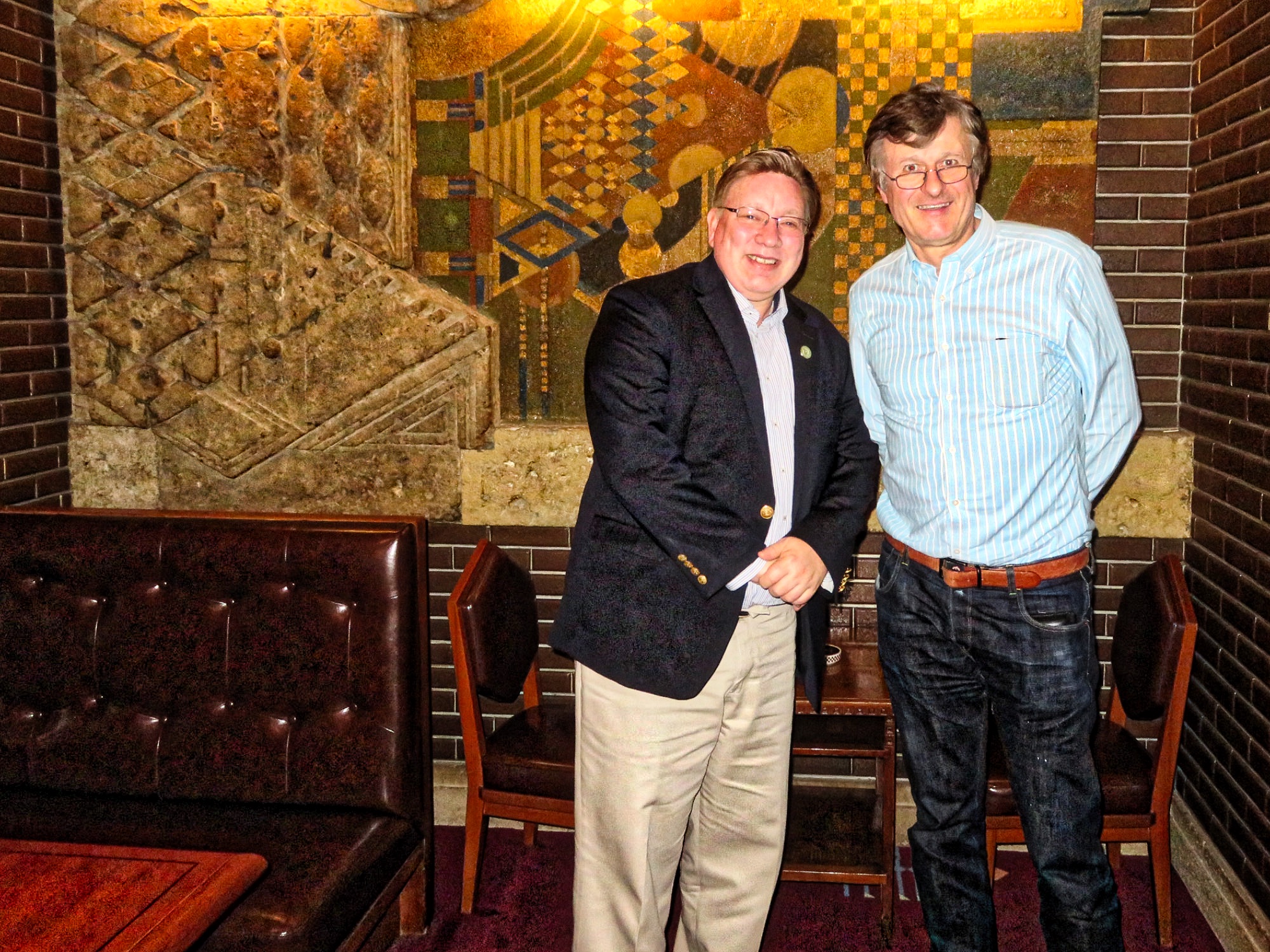
Meeting with Professor Mikael Adolphson, Trinity Fellow and Keidanren Professor of Japanese Studies at Cambridge University on 25 April 2017
Professor Mikael Adolphson, Trinity Fellow and Director of Studies for Asian and Middle Eastern Studies, and Keidanren Professor of Japanese Studies at Cambridge University on Tuesday 25 April 2017
Professor Mikael Adolphson is
- Fellow and Director of Studies for Asian and Middle Eastern Studies at Trinity, and
- Keidanren Professor of Japanese Studies at Cambridge University.
You can find further information on Professor Mikael Adolphson’s work here
- https://en.wikipedia.org/wiki/Mikael_Adolphson
- https://www.trin.cam.ac.uk/undergraduate/courses/asian-and-middle-eastern-studies/
- https://cambridge.academia.edu/MickeyAdolphson
- Amazon.com author page: https://www.amazon.com/Mikael-S.-Adolphson/e/B001JSB664

Meeting with Professor Mikael Adolphson, Trinity Fellow and Keidanren Professor of Japanese Studies at Cambridge University on 25 April 2017 If you are Trinity College Cambridge member in Japan or visiting and like to register:
Copyright (c) 2017 Trinity in Japan Society All Rights Reserved
-
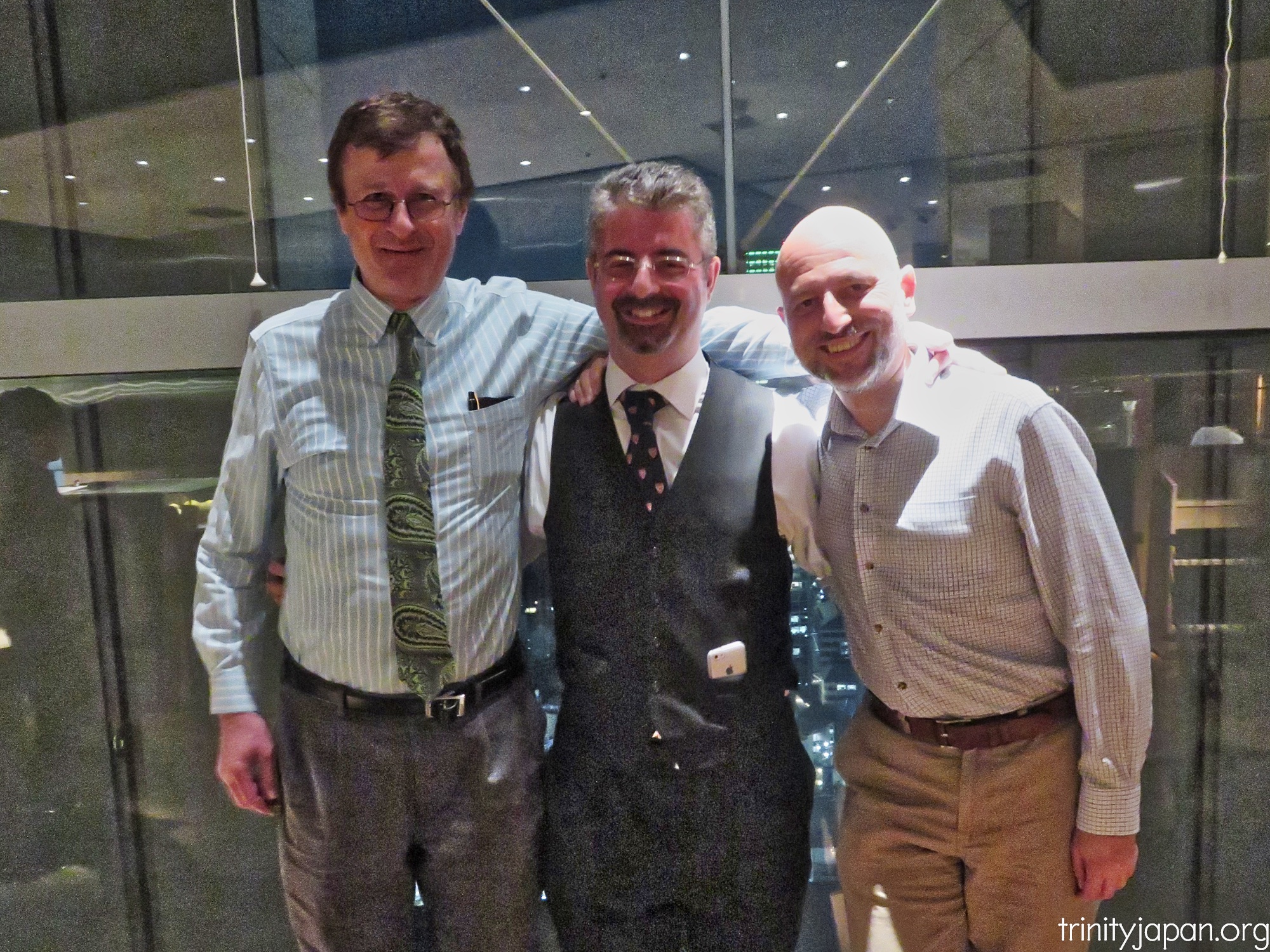
Trinity in Japan meeting on Friday 19 May 2017 at 19:00 in Tokyo
To join (Trinity College Cambridge members):
The fee is again YEN 10,000 including a kaiseki menu and unlimited drinks for about 2 hours, please prepay the fee as always. Usually we go for nijikai nearby.
Registration and prepayment deadline is Wednesday 17 May 2017. I will send location details and account details for prepayment to those who register.

Trinity in Japan meeting on Friday 19 May 2017 
Trinity in Japan meeting on Friday 19 May 2017 
Trinity in Japan meeting on Friday 19 May 2017 
Trinity in Japan meeting on Friday 19 May 2017 Trinity in Japan dinner meeting Copyright (c) 2017 Trinity in Japan Society All Rights Reserved
-
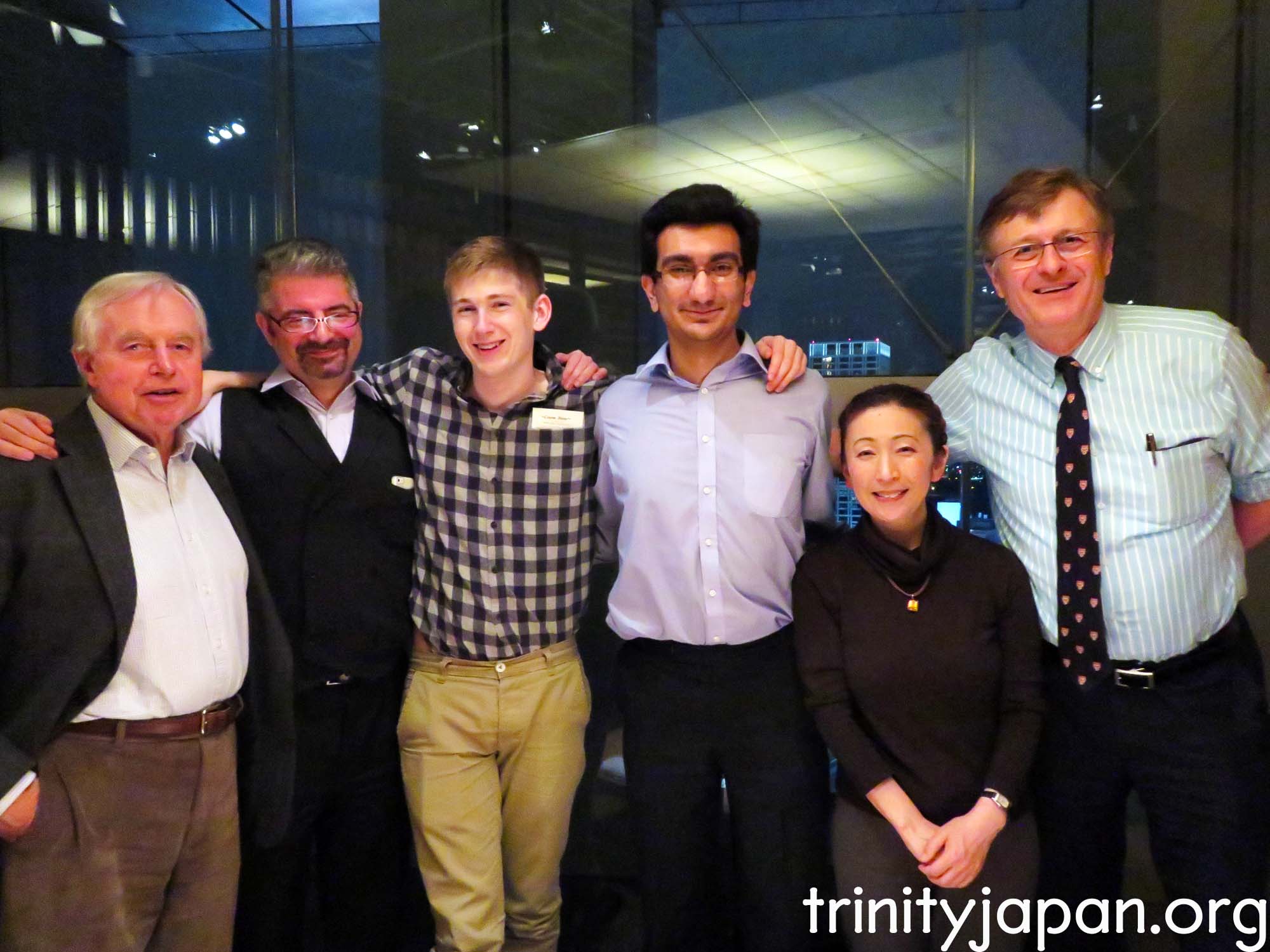
Trinity in Japan meeting on Friday 14 April 2017 at 19:00 in Tokyo
To join (Trinity College Cambridge members):
The fee is again YEN 10,000 including a kaiseki menu and unlimited drinks for about 2 hours, please prepay the fee as always. Usually we go for nijikai nearby.
Registration and prepayment deadline is Friday 7 April 2017. I will send location details and account details for prepayment to those who register.
Trinity in Japan dinner meeting If you are Trinity College Cambridge member living in or visiting Japan and like to register:
Copyright (c) 2017 Trinity in Japan Society All Rights Reserved
-
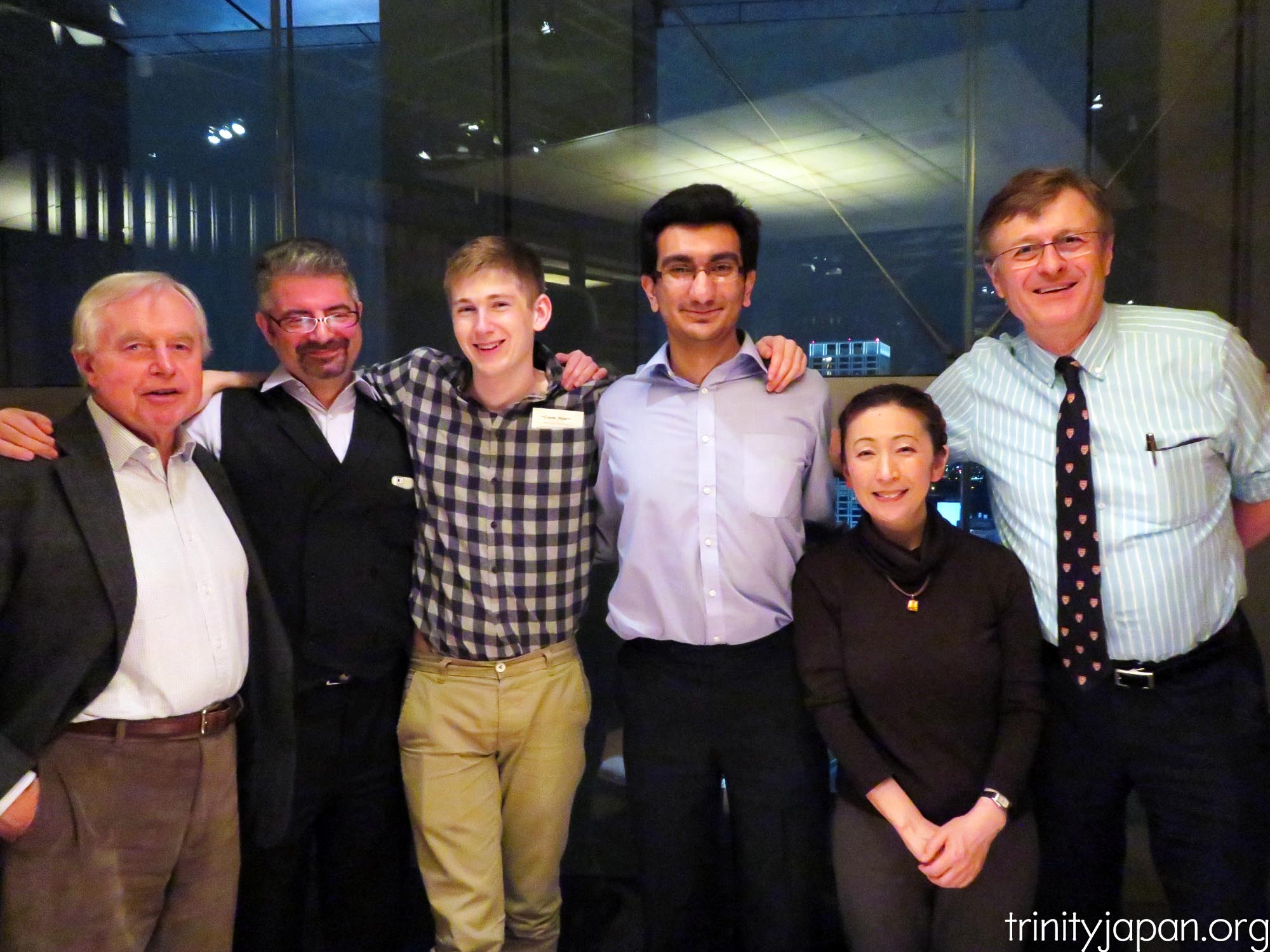
Trinity in Japan New Year event 2017: Shinnenkai on Friday 3 February 2017 19:00 in Tokyo
To join (Trinity College Cambridge members):
The fee is again YEN 10,000 including a kaiseki menu and unlimited drinks for about 2 hours, please prepay the fee as always. Usually we go for nijikai nearby.
Registration and prepayment deadline is Friday 27 January 2017. I will send location details and account details for prepayment to those who register.
Trinity in Japan dinner meeting If you are Trinity College Cambridge member living in or visiting Japan and like to register:
Copyright (c) 2017 Trinity in Japan Society All Rights Reserved
-
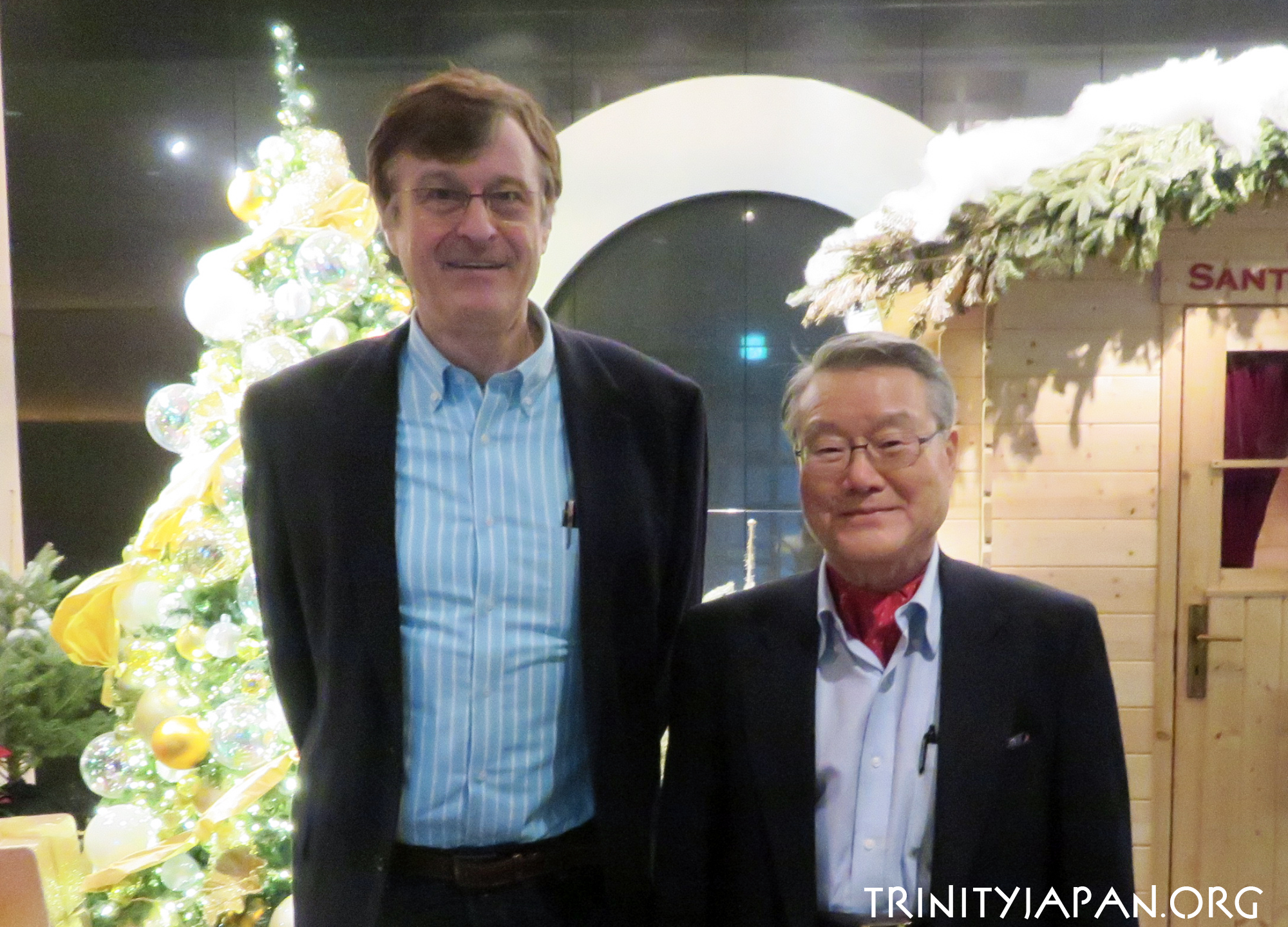
Meeting with Ambassador Ra (13 December 2016)
Meeting with Ambassador Ra (13 December 2016)
Copyright 2016 Trinity in Japan Society All Rights Reserved
-
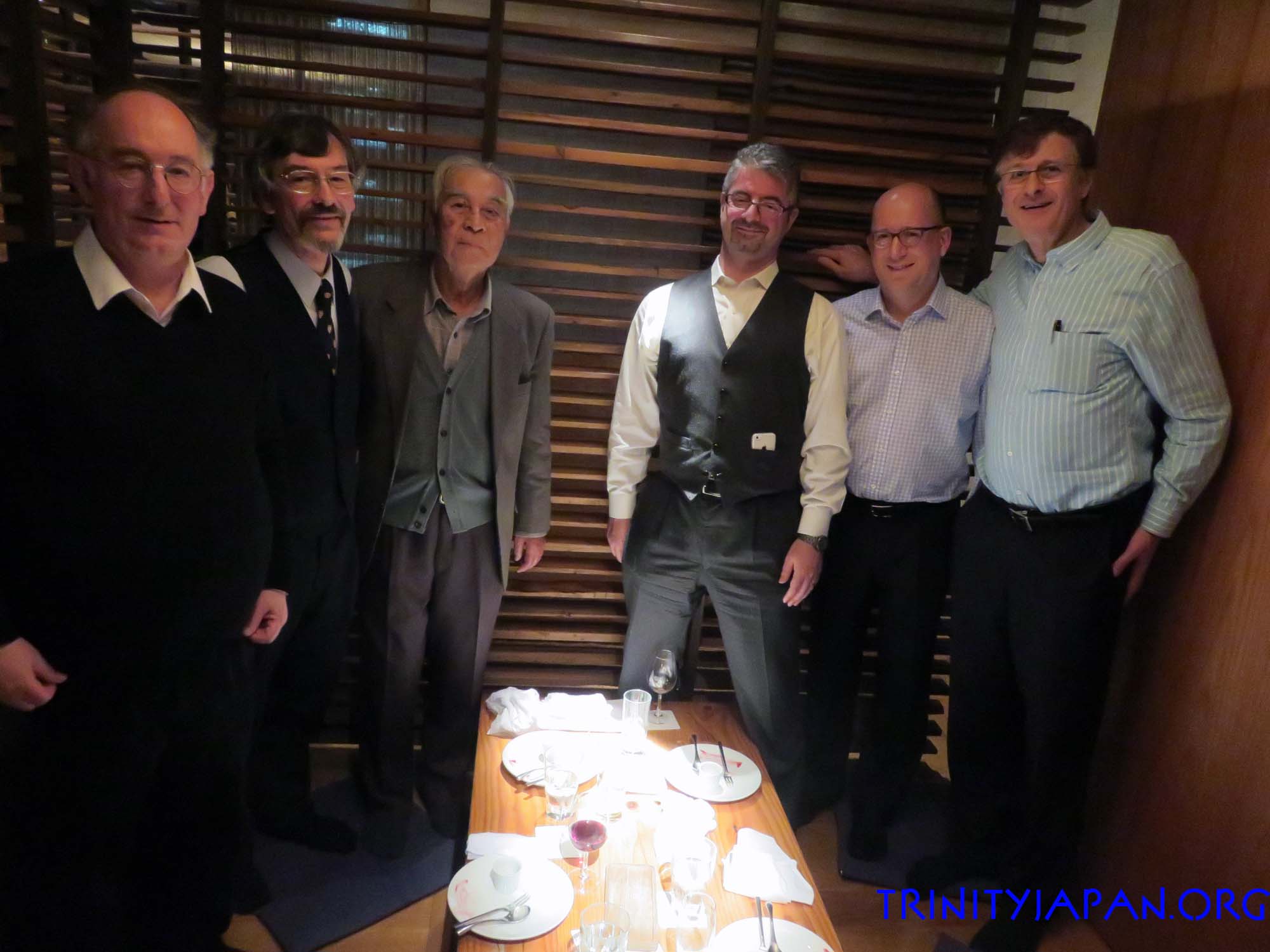
Bonenkai with Trinity Senior Research Fellow Professor Dominic Lieven on 8 December 2016
Meet one of the most eminent scholars of Russian and European history
On Thursday 8 December 2016 at 19:00 Trinity Senior Research Fellow Professor Dominic Lieven will join us again.
Professor Dominic Lieven is THE most eminent scholar and author of Russian history and much more, you can find more detail here and watch some of his video lectures below:
- https://en.wikipedia.org/wiki/Dominic_Lieven
- Professor Lieven at LSE
- Professor Dominic Lieven at Harvard
- And here, Dominic Lieven on “The European Crisis” in Nikkei
more about Dominic Lieven below


Trinity in Japan Bonenkai with Trinity Senior Research Fellow Professor Dominic Lieven on 8 December 2016 
Trinity in Japan Bonenkai with Trinity Senior Research Fellow Professor Dominic Lieven on 8 December 2016 
Trinity in Japan Bonenkai with Trinity Senior Research Fellow Professor Dominic Lieven on 8 December 2016 
Trinity in Japan Bonenkai with Trinity Senior Research Fellow Professor Dominic Lieven on 8 December 2016 
Trinity in Japan Bonenkai with Trinity Senior Research Fellow Professor Dominic Lieven on 8 December 2016 
Trinity in Japan Bonenkai with Trinity Senior Research Fellow Professor Dominic Lieven on 8 December 2016 
Trinity in Japan Bonenkai with Trinity Senior Research Fellow Professor Dominic Lieven on 8 December 2016 
Trinity in Japan Bonenkai with Trinity Senior Research Fellow Professor Dominic Lieven on 8 December 2016 
Trinity in Japan Bonenkai with Trinity Senior Research Fellow Professor Dominic Lieven on 8 December 2016 Dominic Lieven’s most recent book: Towards the Flame: Empire, War and the End of Tsarist Russia
Professor Dominic Lieven’s most recent book Towards the Flame: Empire, War and the End of Tsarist Russia was selected as FINANCIAL TIMES BOOK OF THE YEAR 2015, and was awarded the Pushkin House Prize – watch interviews with Professor Dominic Lieven here.
Professor Lieven’s recent book “Russia against Napoleon. The Battle for Europe, 1807 to 1814“, won the Wolfson History Prize and the Annual Prize of the Fondation Napoléon for the best foreign work on the Napoleonic era.
CIRSD Conference on WWI: Panel “What Kind of Failure?” – Prof. Dominic Lieven
Dominic Lieven: Dismantling Anglophone Hegemony Is a Costly Enterprise
Here are some more of Professor Dominic Lieven’s works
- Empire: The Russian Empire and Its Rivals (Yale Nota Bene)
- Nicholas II: Twilight of the Empire
- Towards the Flame: Empire, War and the End of Tsarist Russia
- The End of Tsarist Russia: The March to World War I and Revolution
- Russia Against Napoleon: The True Story of the Campaigns of War and Peace
- The Cambridge History of Russia: Volume 2, Imperial Russia, 1689–1917
- The Aristocracy in Europe 1815-1914
- 帝国の興亡〈上〉―グローバルにみたパワーと帝国
- 帝国の興亡〈下〉―ロシア帝国とそのライバル
- ニコライ2世―帝政ロシア崩壊の真実
To join (Trinity College Cambridge members only):
The fee is again YEN 10,000 including a kaiseki menu and unlimited drinks for about 2 hours, please prepay the fee as usual. Usually we go for nijikai nearby.
Registration and prepayment deadline is Friday 2 December 2016. I will send location details and account details for prepayment to those who register.
Trinity in Japan dinner meeting If you are Trinity College Cambridge member living in or visiting Japan and like to register:
Copyright 2016 Trinity in Japan Society All Rights Reserved
-
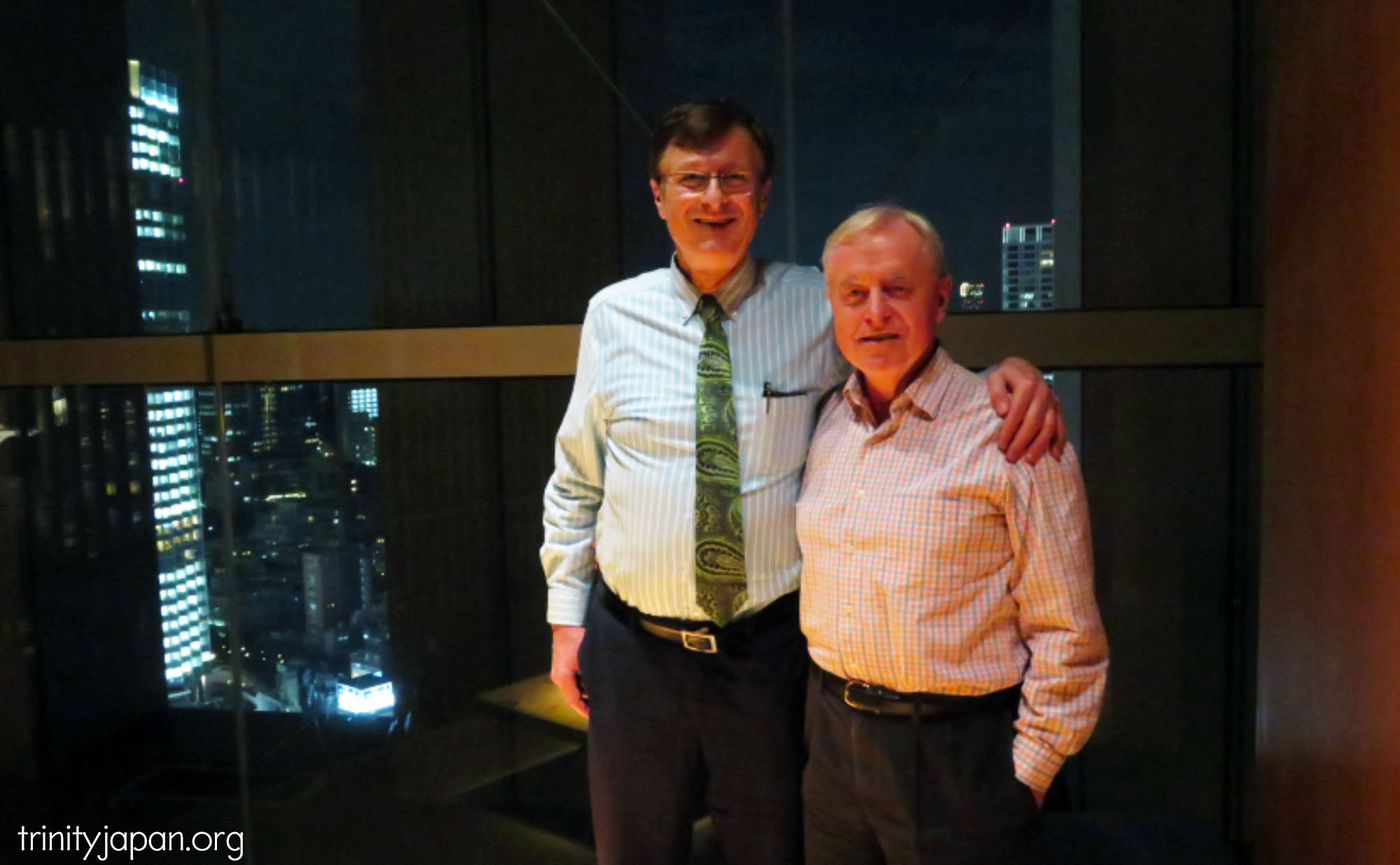
Trinity in Japan dinner on Thursday 27 October 2016 with Anthony Millington
Our October dinner meeting will be on Thursday 27 October 2016 at 19:00 in central Tokyo.
The fee is again YEN 10,000 including a kaiseki menu and unlimited drinks for about 2 hours, please prepay the fee as usual. Usually we go for nijikai nearby.
Registration deadline is Friday 21 October 2016. I will send location details and account details for prepayment to those who register.

Trinity in Japan 27 Oct 2016 
Trinity in Japan 27 Oct 2016 If you are Trinity College Cambridge member living in or visiting Japan and like to register:
Copyright 2016 Trinity in Japan Society All Rights Reserved
-
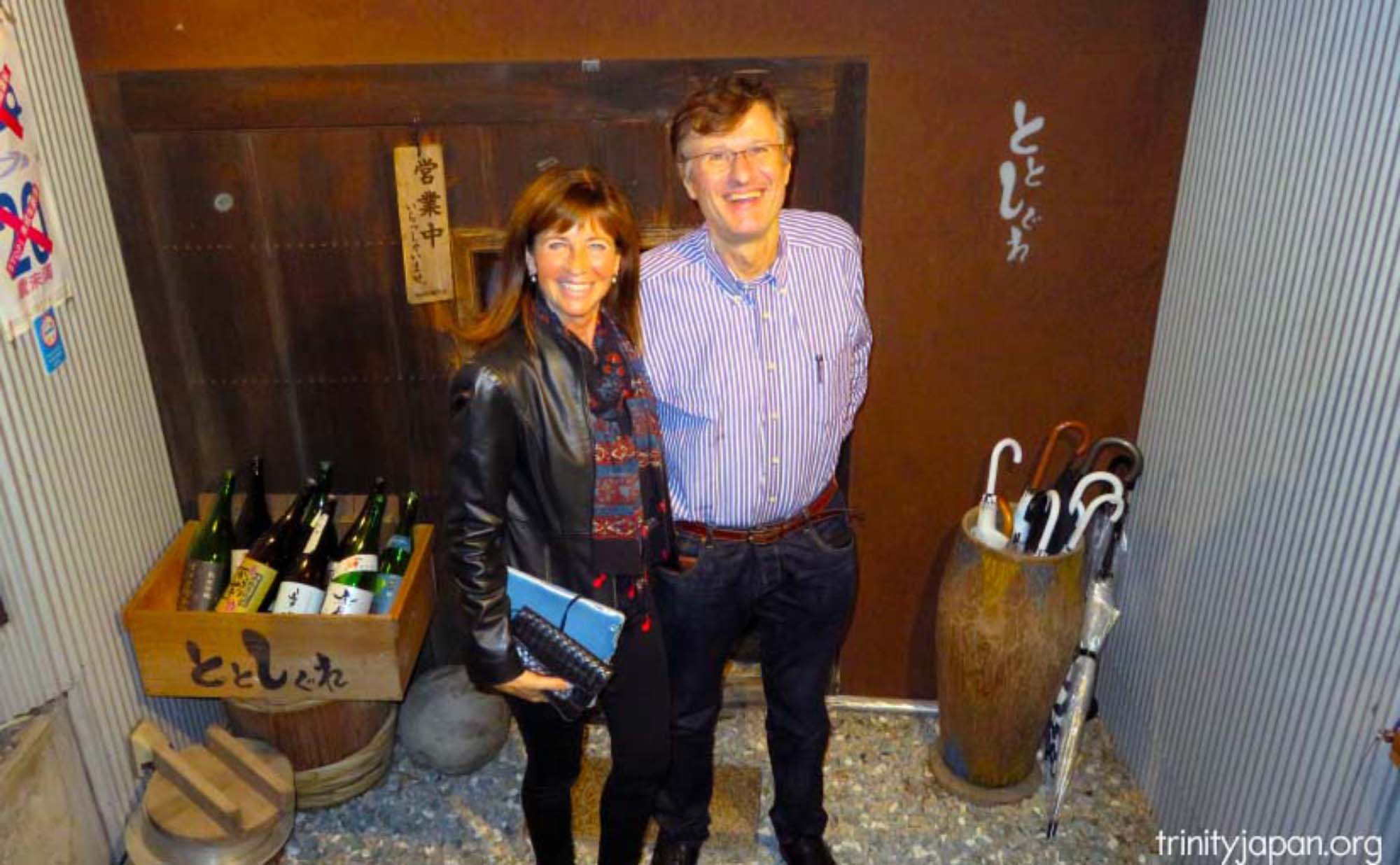
Butler House reunion
We had a small Butler House reunion in Tokyo on Saturday 1 October 2016.

Butler House Trinity College Cambridge reunion 
Butler House reunion in Tokyo Copyright 2016 Trinity in Japan Society All Rights Reserved
-
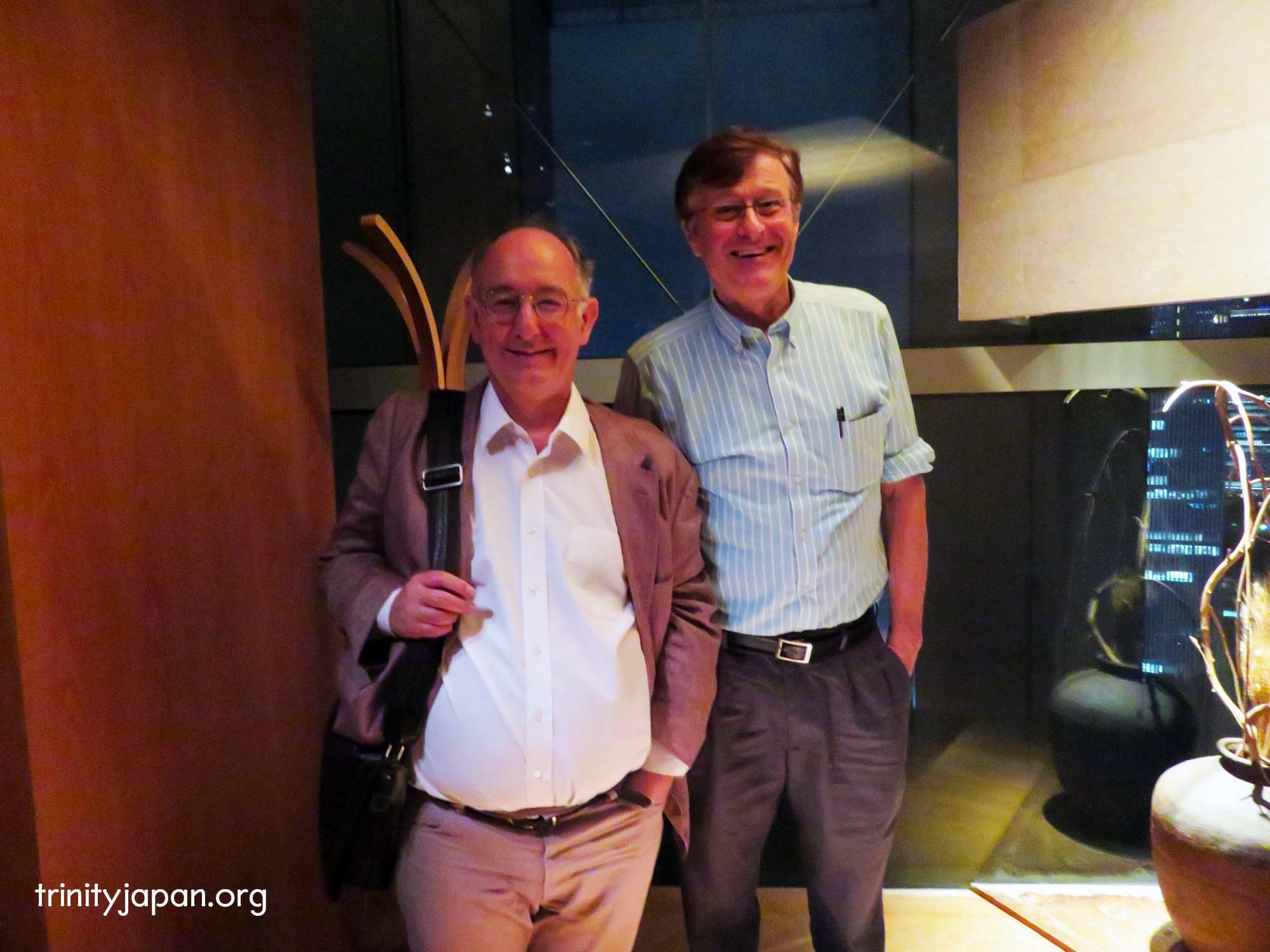
Trinity in Japan Society meeting on Friday 16 September 2016 with Professor Dominic Lieven
Our September dinner meeting will be on Friday 16 September 2016 at 19:00 in central Tokyo.
The fee is again YEN 10,000 including a kaiseki menu and unlimited drinks for about 2 hours, please prepay the fee as usual. Usually we go for nijikai nearby.
Registration deadline is Friday 9 September 2016. I will send location details and account details for prepayment to those who register.
If you are Trinity College Cambridge member living in or visiting Japan and like to register:
Copyright 2016 Trinity in Japan Society All Rights Reserved
-
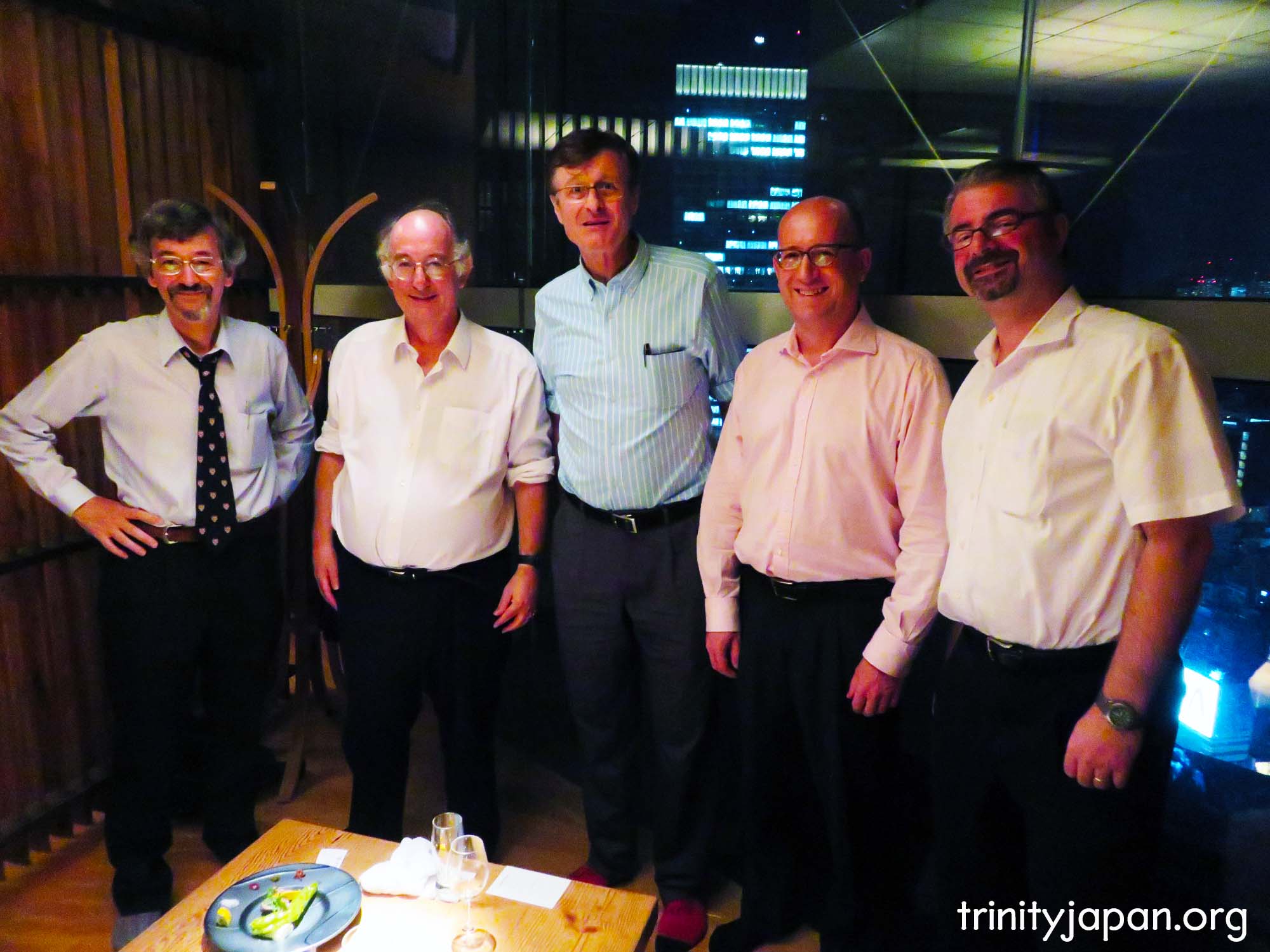
Meet Trinity Senior Research Fellow Professor Dominic Lieven on Thursday 25 August 2016 at 19:00
For our dinner meeting on Thursday 25 August 2016 at 19:00 in Tokyo Trinity Senior Research Fellow and Research Professor Dominic Lieven joined us.

Trinity Senior Research Fellow Professor Dominic Lieven Professor Dominic Lieven is an eminent scholar of Russian history, you can find more detail here:
- https://en.wikipedia.org/wiki/Dominic_Lieven
- Professor Lieven at LSE
- Professor Dominic Lieven at Harvard
- And here, Dominic Lieven on “The European Crisis” in Nikkei
Professor Dominic Lieven’s recent book “Russia against Napoleon. The Battle for Europe, 1807 to 1814“, won the Wolfson History Prize and the Annual Prize of the Fondation Napoléon.

Trinity in Japan Dinner with Trinity Senior Research Fellow Professor Dominic Lieven on Thursday 25 August 2016 
Trinity in Japan Dinner with Trinity Senior Research Fellow Professor Dominic Lieven on Thursday 25 August 2016 
Trinity in Japan Dinner with Trinity Senior Research Fellow Professor Dominic Lieven on Thursday 25 August 2016 
Trinity in Japan Dinner with Trinity Senior Research Fellow Professor Dominic Lieven on Thursday 25 August 2016 
Trinity in Japan Dinner with Trinity Senior Research Fellow Professor Dominic Lieven on Thursday 25 August 2016 
Trinity in Japan Dinner with Trinity Senior Research Fellow Professor Dominic Lieven on Thursday 25 August 2016 
Trinity in Japan Dinner with Trinity Senior Research Fellow Professor Dominic Lieven on Thursday 25 August 2016 
Trinity in Japan Dinner with Trinity Senior Research Fellow Professor Dominic Lieven on Thursday 25 August 2016 If you are Trinity College Cambridge member living in or visiting Japan and like to register:
Copyright 2016 Trinity in Japan Society All Rights Reserved
-
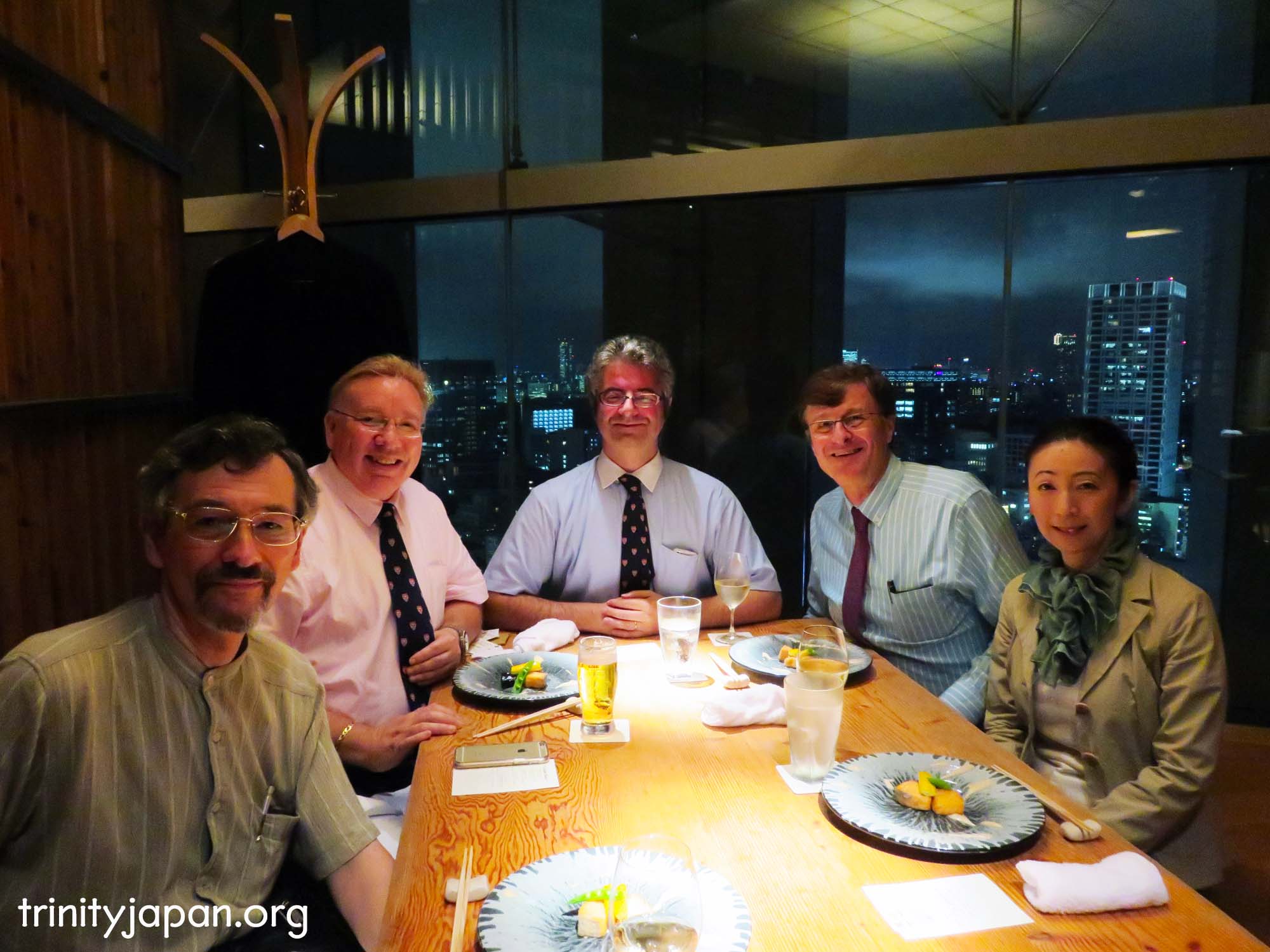
Meet Professor Mikael Adolphson on Friday 15 July 2016
Professor Mikael Adolphson, Trinity Fellow and Director of Studies for Asian and Middle Eastern Studies, and Keidanren Professor of Japanese Studies at Cambridge University
Professor Mikael Adolphson, Fellow and Director of Studies for Asian and Middle Eastern Studies at Trinity, and Keidanren Professor of Japanese Studies at Cambridge University will join us for dinner.
You can find further information on Professor Mikael Adolphson’s work here
https://ualberta.academia.edu/MickeyAdolphson, and
Department of East Asian Studies, University of AlbertaOur dinner meeting will be on Friday 15 July 2016 at 19:00. The fee is again YEN 10,000 including a kaiseki menu and unlimited drinks for about 2 hours, please prepay the fee as usual. Usually we go for nijikai nearby.
Registration deadline is Friday 8 July 2016. I will send location details and account details for prepayment to those who register.


Trinity in Japan with Professor Mikael Adolphson on Friday 15 July 2016 
Trinity in Japan with Professor Mikael Adolphson on Friday 15 July 2016 
Trinity in Japan with Professor Mikael Adolphson on Friday 15 July 2016 
Trinity in Japan with Professor Mikael Adolphson on Friday 15 July 2016 
Trinity in Japan with Professor Mikael Adolphson on Friday 15 July 2016 
Trinity in Japan with Professor Mikael Adolphson on Friday 15 July 2016 If you are Trinity College Cambridge member living in or visiting Japan and like to register:
Copyright 2016 Trinity in Japan Society All Rights Reserved
-
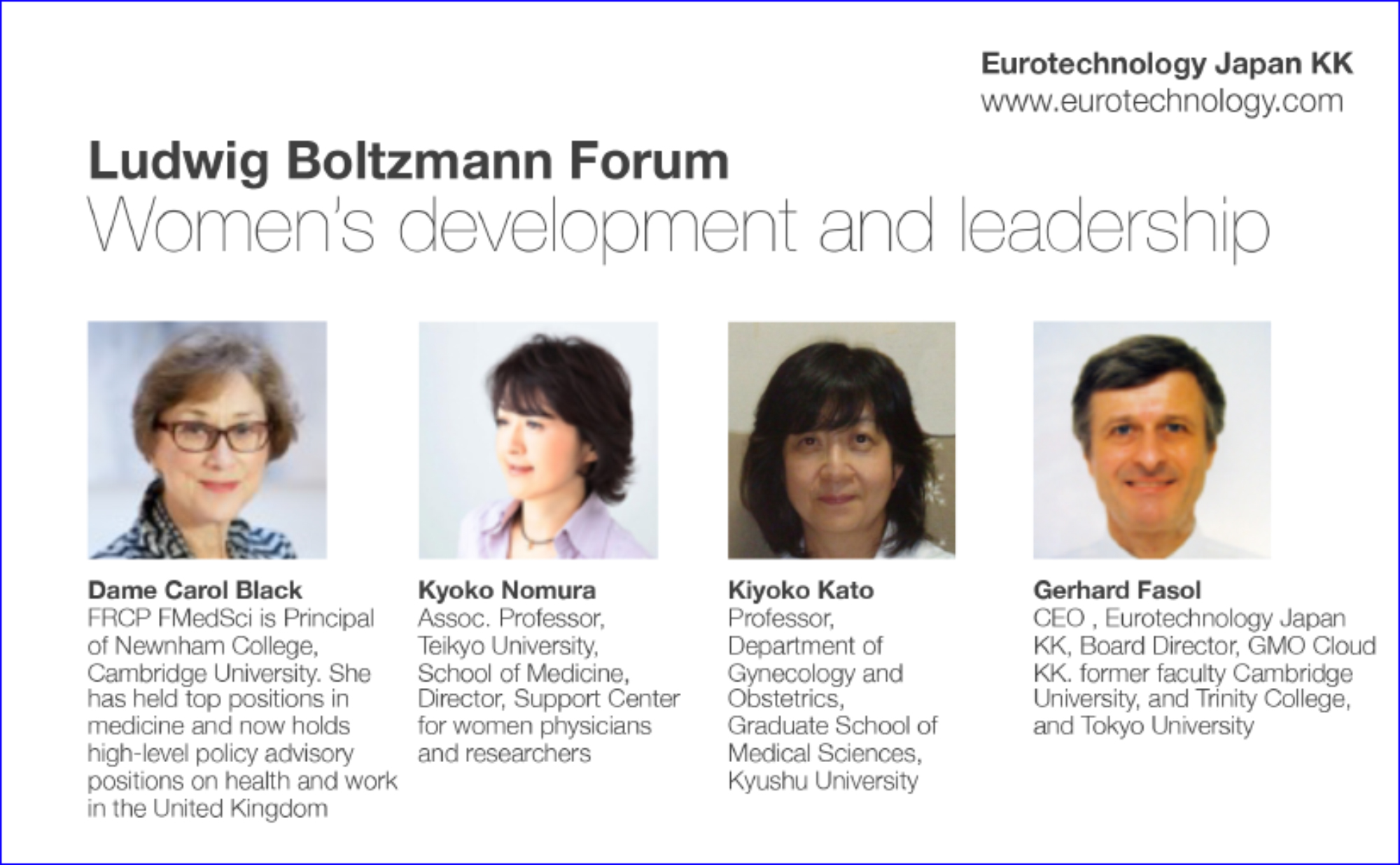
Ludwig Boltzmann Forum on Women’s development and leadership 16 May 2016
Women’s development and leadership
Tokyo, Monday 16 May 2016, 9:00-11:00am
Trinity in Japan members are invited to apply for participation in the workshop “Ludwig Boltzmann Forum on Women’s development and leadership”
Location:
Hotel Chinzanso Tokyo (Satsuki Conference Room)
Sekiguchi 2-10-8, Bunkyo-ku, Tokyo 112-8680, JapanProgram
- 9:00-9:20 Gerhard Fasol CEO, Eurotechnology Japan KK, Board Director, GMO Cloud KK. former faculty Cambridge University, and Trinity College, and Tokyo University
- 9:20-9:40 Dame Carol Black DBE FRCP FMedSci is Principal of Newnham College, Cambridge University. She has held top positions in medicine and now holds high-level policy advisory positions on health and work in the United Kingdom
- 9:40-10:00 Kyoko Nomura, Assoc. Professor, Teikyo University, School of Medicine, Director, Support Center for women physicians and researchers
- 10:00-10:20 Kiyoko Kato, Professor, Department of Gynecology and Obstetrics, Graduate School of Medical Sciences, Kyushu University
- 10:20-11:00 Discussion

Ludwig Boltzmann Forum on Women’s development and leadership 16 May 2016 
Ludwig Boltzmann Forum on Women’s development and leadership Gerhard Fasol: Ludwig Boltzmann Forum on Women’s development and leadership – workshop objective
Gerhard Fasol
CEO , Eurotechnology Japan KK,
Board Director, GMO Cloud KK.
former faculty Cambridge University and
past Fellow, Trinity College CambridgeDame Carol Black DBE FRCP FMedSci: Advancing women in Healthcare
Dame Carol Black DBE FRCP FMedSci
Principal of Newnham College, Cambridge University.
She has held top positions in medicine and now holds high-level policy advisory positions on health and work in the United KingdomKyoko Nomura: Gender inequality in Japan: a case report of women doctors
Kyoko Nomura
Director, Support Center for women physicians and researchers,
Associate professor, Department of Hygiene and Public Health, Teikyo University, School of Medicine,
Associate professor, Teikyo School of Public HealthKiyoko Kato: The current state of female doctors in Japanese Obstetrics and Gynecology
Kiyoko Kato
Professor
Department of Gynecology and Obstetrics,
Graduate School of Medical Sciences, Kyushu University
Ludwig Boltzmann Forum on Women’s development and leadership 
Ludwig Boltzmann Forum on Women’s development and leadership 
Ludwig Boltzmann Forum on Women’s development and leadership 
Ludwig Boltzmann Forum on Women’s development and leadership 
Ludwig Boltzmann Forum on Women’s development and leadership 
Ludwig Boltzmann Forum on Women’s development and leadership 
Ludwig Boltzmann Forum on Women’s development and leadership 
Ludwig Boltzmann Forum on Women’s development and leadership 
Ludwig Boltzmann Forum on Women’s development and leadership 
Ludwig Boltzmann Forum on Women’s development and leadership 
Ludwig Boltzmann Forum on Women’s development and leadership 
Ludwig Boltzmann Forum on Women’s development and leadership 
Ludwig Boltzmann Forum on Women’s development and leadership 
Ludwig Boltzmann Forum on Women’s development and leadership 
Ludwig Boltzmann Forum on Women’s development and leadership Contact
Copyright 2016 Eurotechnology Japan KK All Rights Reserved
-
Trinity in Japan Meeting on Friday 27 May 2016 at 19:00 in Tokyo
Meeting on Friday 27 May 2016 at 19:00 in Tokyo
We will have our next meeting on Friday 27 May 2016 2016 at 19:00. The fee is again YEN 10,000 including a kaiseki menu and unlimited drinks for about 2 hours, please prepay the fee as usual one week in advance. Usually we go for nijikai nearby.
Registration deadline is Friday 20 May 2016. I will send location details and account details for prepayment to those who register.
If you are Trinity College Cambridge member living in or visiting Japan and like to register:

Trinity in Japan Friday, 27 May 2016 Copyright 2016 Trinity in Japan Society All Rights Reserved

You must be logged in to post a comment.